


If you’ve scrolled through Instagram lately or walked past a high-end gym, you’ve probably seen it.
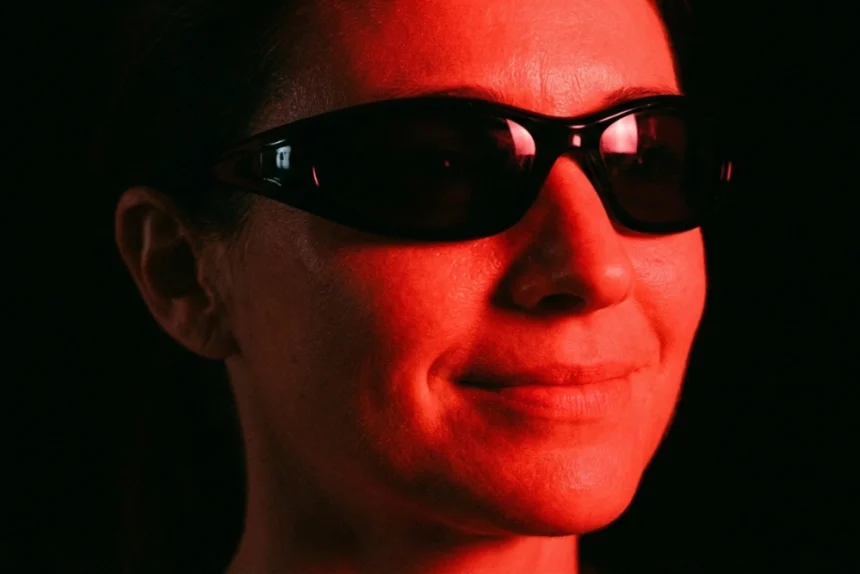
It looks like a scene from a sci-fi movie. People wearing futuristic goggles, bathed in an intense crimson glow, standing inside what looks like a tanning bed from Mars.
This is red light therapy.
For years, it was a secret weapon for elite athletes and celebrities. Now, it’s everywhere. You can find these glowing panels in local spas, chiropractors’ offices, and even on Amazon for your bathroom counter.
But let’s be honest. When a health trend looks this flashy, it’s hard not to ask: Does red light therapy work? Is this just a “magic lamp” sold to make money? Or is there real biology happening under that glow?
Here is the simple truth about red light therapy benefits, the hard numbers on what it does for skin anti-aging and pain, and whether it’s worth the hype.
What Is Red Light Therapy? (Not Just a Tanning Bed)
To understand red light therapy, you have to forget everything you know about tanning beds. Tanning beds use UV light, which damages your skin to darken it.
Red light therapy is the opposite. It uses specific wavelengths of light—typically Red (630–670 nm) and Near-Infrared (800–880 nm)—that are “bioactive.” That’s a fancy way of saying the light physically changes how your cells work.
Think of it like photosynthesis. When sunlight hits a plant, the plant turns that light into fuel to grow. According to the Cleveland Clinic, your body does something similar.
How Does Red Light Therapy Work? (The Science)
Here is the simplified version of the biology:
- The Target: Deep inside your cells, you have tiny “batteries” called mitochondria. Their job is to create energy.
- The Boost: When red light hits your skin, those batteries soak it up.
- The Result: Your cells get a massive energy surge.
When your cells have more energy, they do their jobs better. They repair damage, replicate, and fight off inflammation. Basically, using red light therapy is like charging your body’s internal phone battery.
Top 2 Red Light Therapy Benefits
While fans claim it fixes everything from sleep to hair loss, the science is strongest in two specific areas: skin health and pain relief.
1. Skin Anti-Aging: The Fountain of Youth?
We all want to look a little less tired. This is the main reason people try red light therapy for skin.
As we age, our body gets lazy about making collagen (the stuff that keeps skin firm and bouncy). Research from the National Institutes of Health (NIH) suggests that red light wakes up the cells responsible for making collagen and tells them to get back to work.
The Hard Data:
In controlled clinical trials, participants treated their skin twice a week for a month. The result? They didn’t just feel glowy. Measurements showed a 20% to 50% reduction in wrinkle severity. They also saw significantly smoother skin texture compared to people who sat under a fake light.
Note: This isn’t an overnight fix. You won’t wake up looking 18 tomorrow. But with consistent use, the improvements are chemically real.
2. Pain Relief: Why Near-Infrared Light Matters
Smoother skin is nice, but for many people, the pain relief is the game-changer. This is where near-infrared light therapy comes in.
Unlike visible red light, near-infrared light is invisible and travels deeper than the skin—right into your muscles, joints, and bones. According to WebMD, this deep light reduces inflammation, which is usually the culprit behind arthritis, sore knees, and back pain.
The Pain Stats:
For conditions like osteoarthritis and chronic muscle pain, studies have shown pain reductions of 30% to 50%. That is a massive difference. For someone living in daily pain, that’s the difference between struggling to walk and enjoying a stroll in the park.
How to Use Red Light Therapy: The “Goldilocks” Rule
Here is where most people mess up. They think, “If 10 minutes of red light therapy is good, 60 minutes must be amazing!”
Wrong.
Scientists call this the Biphasic Dose Response. It’s the same logic as watering a houseplant.
- Too little water: The plant dries out.
- Too much water: The plant drowns.
- Just right: The plant grows.
Studies show you need a specific dose for about 10 to 20 minutes. If you stand there for an hour, you aren’t getting “extra” healing. You might actually stress your cells out and cancel the benefits. Stick to the timer.
Is Red Light Therapy Safe?
Compared to pills, surgeries, or injections, red light therapy is incredibly safe. Since there are no UV rays, you won’t get a sunburn, and it doesn’t raise your risk of skin cancer.
However, keep these safety tips in mind:
- Wear the Goggles: The light is incredibly bright. Staring at it for 20 minutes can strain your eyes.
- Check Your Meds: Some medications (like Accutane) make your skin super-sensitive to light. If you’re taking something strong, ask your doctor first.
Red Light Therapy at Home vs. Professional Spas
You don’t need to be a millionaire to try this, but you do need to be smart.
Going to a Spa:
You get access to massive, medical-grade panels. But at $25 to $85 per session, going three times a week adds up fast.
Buying at Home:
You can buy panels for your house, but you have to be a detective.
- The Trap: A cheap $30 wand from a random website might just be a red lightbulb. It looks cool, but it won’t do anything.
- What to Look For: To get the results we talked about, you need a device that specifically lists its power (irradiance of 10-100 mW/cm²) and wavelengths (630-670nm and 800-880nm). If the company won’t tell you those numbers, don’t buy it.
FAQs
What are the benefits of red light therapy?
Red light therapy stimulates mitochondria to produce more energy, helping cells repair themselves faster. The two main proven benefits are skin anti-aging (reducing wrinkles by 20–50% by boosting collagen) and pain relief (reducing inflammation in muscles and joints using deep-penetrating near-infrared light).
How often should you use red light therapy?
For the best results, consistency is vital. Aim for sessions 3 to 5 times per week. Stick to the “Goldilocks Rule” of 10 to 20 minutes per treatment area. Longer sessions do not provide extra benefits and may actually negate the positive effects due to cellular stress.
Is red light therapy safe for skin?
Yes. Unlike tanning beds, red light therapy devices do not emit UV rays, meaning they will not cause sunburn or increase skin cancer risk. However, the light is extremely bright, so you should always wear blackout goggles to protect your eyes, and avoid use if taking photosensitizing medications.
What is the difference between red and near-infrared light?
Visible red light (630–670 nm) targets surface-level tissue, making it ideal for treating wrinkles, scars, and skin texture. Invisible near-infrared light (800–880 nm) has a longer wavelength that penetrates deeper into the body, targeting muscles, joints, and bones to reduce chronic pain and inflammation.
The Bottom Line
So, does red light therapy actually work?
Yes. The data shows real improvements in wrinkles (up to 50%) and pain relief (up to 50%).
But here is the catch: It only works if you are consistent. If you’re looking for a miracle cure that fixes your back in one day, you’ll be disappointed.
Think of it like eating healthy or going to the gym. It’s a lifestyle tool. If you treat red light therapy like a supplement—something you do regularly to feed your cells energy—it’s a powerful way to help your body heal from the inside out.
So, put on the goggles, set the timer for 10 minutes, and enjoy the glow.
Disclaimer: This blog post is for informational purposes only and isn’t medical advice. Always chat with a doctor or dermatologist before starting a new treatment, especially if you have sensitive skin or health conditions.