


We’ve all heard it. The rhythmic rumble coming from your partner’s side of the bed, or maybe a loud snort that wakes you up.
In cartoons, snoring means deep sleep. But in real life, it is often a distress signal. For millions of people, this noise is the main sign of sleep apnea.
If you think this is rare, think again. Recent numbers suggest that roughly 1 in 3 adults has some form of this condition. But here is the scary part: Experts estimate that up to 80% of cases go undiagnosed.
That means millions of people are walking around exhausted, fighting for air all night long, and have no idea why. If you are waking up foggy or dozing off during the day, you might be running on empty.
Here is the simple truth about what sleep apnea is, why it’s dangerous, and how you can fix it without going under the knife.
What Is Sleep Apnea? (The “Kinked Hose” Effect)
To understand sleep apnea, let’s look at your throat.
When you’re awake, your throat muscles hold your airway open. When you sleep, these muscles naturally relax. For most people, the air keeps flowing just fine.
But for people with Obstructive Sleep Apnea (OSA), those muscles relax too much. The soft tissue collapses and blocks the way.
Think of a garden hose. If you put a kink in the hose, the water stops flowing. In sleep apnea, your throat is the hose, and the air is the water.
When this happens, you stop breathing. This can last for 10 seconds or a minute. Your brain eventually panics and wakes you just enough to gasp or choke. This reopens the airway and resets the cycle.
According to the National Institutes of Health (NIH), severe cases can stop breathing 30 times or more every single hour. Imagine holding your breath every two minutes, all night long. No wonder you feel tired.
4 Common Sleep Apnea Symptoms to Watch For
Snoring is the most famous symptom, but not everyone who snores has sleep apnea. So, how do you tell the difference? According to the Mayo Clinic, you should watch out for these red flags:
1. The “Stop and Gasp”
This is the scary one. If a partner notices your snoring stops abruptly, followed by silence and then a loud gasp or snort, that is a classic sign of apnea.
2. Morning Headaches & Dry Mouth
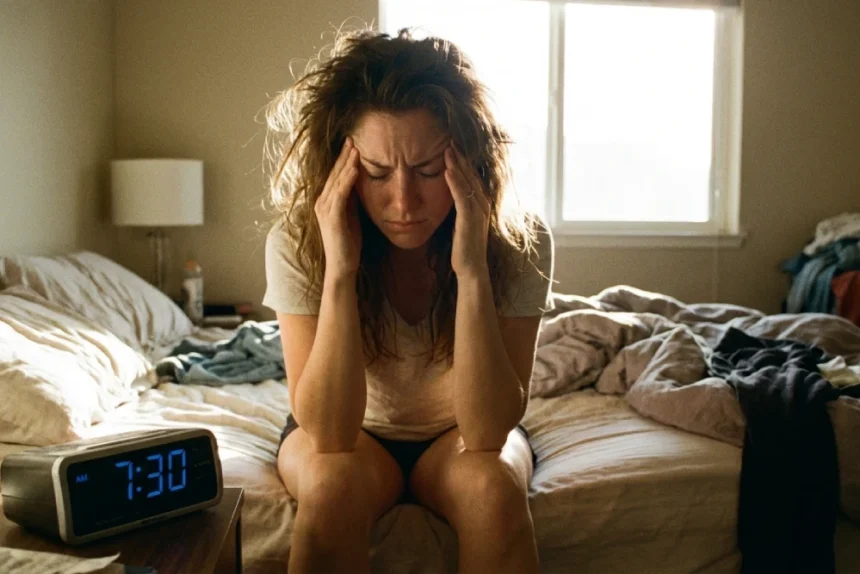
Because you aren’t getting enough oxygen, you might wake up with a pounding head. Gasping for air also forces you to breathe through your mouth, leaving you parched.
3. Extreme Daytime Fatigue
You could sleep for 9 hours and still feel exhausted. You might doze off reading, watching TV, or even driving.
4. Irritability and Mood Changes
Poor sleep affects your emotional regulation. You might feel grumpy, depressed, or have a notably short fuse.
Why Is Sleep Apnea Dangerous? (The Risks)
You might think, “So what? I’m just a little tired.”
But sleep apnea is about much more than being sleepy. It takes a massive toll on your internal organs. When you stop breathing, your oxygen drops. Your heart has to work overtime to pump blood to compensate. This puts immense stress on your system.
The CDC warns that untreated sleep apnea is linked to serious issues like:
- High blood pressure
- Stroke
- Type 2 Diabetes
It creates a vicious cycle. Sleep deprivation messes with your hunger hormones, making you crave sugar and gain weight… which usually makes the apnea worse.
Diagnosis: Do You Need a Sleep Study?
If you suspect you have this condition, don’t guess. You need a test.
In the past, diagnosing sleep apnea meant sleeping in a lab hooked up to dozens of wires while a stranger watched you. While that’s still the most accurate way, technology has changed the game.
Today, doctors often prescribe Home Sleep Tests. You take a small device home, wear a finger monitor and a nose tube, and sleep in your own bed. The device measures your breathing to calculate your AHI Score (how many times you stop breathing per hour). It’s simple and painless.
Sleep Apnea Treatment Options (Without Surgery)
Here is the good news: Sleep apnea is very treatable. You rarely need surgery. There are highly effective ways to get your sleep back on track.
CPAP Therapy (The Gold Standard)
CPAP stands for Continuous Positive Airway Pressure. It involves a machine connected to a mask that blows a gentle stream of air into your throat.
Remember the “kinked hose”? The CPAP acts like water pressure that forces the kink to straighten out. Research shows that consistent CPAP use can cut the risk of heart-related death by nearly half (up to 55%). Most patients report feeling like a “new person” after just a few nights.
Oral Appliances (The Mouthguard)
If your sleep apnea is mild, or you absolutely hate the machine, a dentist can make you a special mouthpiece. These push your lower jaw slightly forward, creating more space in the back of the throat to keep the tissue from collapsing.
3 Lifestyle Changes That Help
Sometimes, changing your habits can drastically reduce the severity of the problem.
- Weight Loss: Studies show a “dose-response”: losing just 10% to 15% of your body weight can move many people from “severe” to “mild” apnea.
- The Positional Fix: Gravity is the enemy. Sleeping on your side helps keep the airway open. Pro Tip: Sew a tennis ball into the back of your pajama shirt to stop you from rolling onto your back.
- Skip the Nightcap: Alcohol relaxes your throat muscles even more than usual. Avoid drinks for at least four hours before bed.
The Bottom Line
Snoring isn’t just a quirky habit. It’s your body trying to tell you something.
If you recognize yourself in these signs, please don’t ignore them. The risks to your heart are real, but the solutions are effective. Imagine waking up in the morning and actually feeling refreshed. That is what sleep apnea treatment offers.
Talk to your doctor. Get the test. Your heart (and your sleeping partner) will thank you.
FAQs
What are the main warning signs of sleep apnea?
The most common signs of sleep apnea include loud snoring, gasping or choking sounds during sleep, and waking up with a dry mouth or headache. Other key indicators are excessive daytime fatigue, irritability, and difficulty concentrating, even after a full night’s rest.
Can sleep apnea be treated without a CPAP machine?
Yes, for mild to moderate cases. Effective alternatives include custom-fitted oral appliances (mouthguards) that reposition the jaw, and lifestyle changes like losing 10–15% of body weight, quitting smoking, and sleeping on your side. However, severe cases usually require CPAP therapy to ensure airway safety.
Why is sleep apnea considered dangerous?
Untreated sleep apnea causes oxygen levels to drop repeatedly during the night, forcing the heart to work harder. This puts significant strain on the cardiovascular system, drastically increasing the risk of high blood pressure, heart attack, stroke, and Type 2 diabetes.
Is snoring always a sign of sleep apnea?
No. Snoring occurs when air flows past relaxed tissues in the throat, causing vibration. While loud snoring is a primary symptom of sleep apnea, simple snoring does not involve breathing to stop. If snoring is accompanied by pauses in breathing or gasping, it indicates obstructive sleep apnea.
Disclaimer: This blog post is for informational purposes only and does not constitute medical advice. Always consult with a qualified healthcare provider for diagnosis and treatment of sleep disorders.