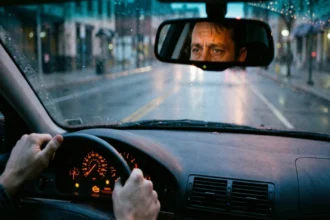



Maybe it starts with a headline on your phone. You see a report about extreme heatwaves or a video of a wildfire pops up on your feed. Suddenly, your chest tightens. A heavy, hollow feeling settles in the pit of your stomach. Before you know it, it’s 2 AM, and you are doomscrolling, wondering if recycling your soda can even matters.
If this sounds familiar, please hear this: You aren’t “overreacting.” You aren’t “too sensitive.” And you certainly aren’t alone.
You are likely experiencing eco-anxiety. It is a deeply human response to the terrifying reality of climate change. It feels like carrying the weight of the world on your shoulders. Today, let’s talk about how to set that weight down—just for a moment—so you can finally catch your breath.
What Is Eco-Anxiety? (You Are Not Overreacting)
We often treat mental health struggles like they are just a glitch in our own brain chemistry. But eco-anxiety is different. The American Psychological Association (APA) describes it as “a chronic fear of environmental doom.” Unlike other anxieties that might lie to you about catastrophes that might happen, eco-anxiety is rooted in scientific fact.
And if you feel this way, you are part of a massive, quiet crowd. A landmark Lancet survey of 10,000 young people found that nearly 60% were “very” or “extremely” worried about climate change.
Even more telling? Over 45% said these feelings hurt their daily life—messing with their sleep, their appetite, or their ability to focus at work.
It isn’t just young people, though Gen Z bears a heavy load. Recent data suggests that around 16% of U.S. adults are reporting significant climate-related distress right now. It is also vital to acknowledge that this weight isn’t shared equally; distress is skyrocketing in frontline communities facing floods, fires, and displacement.
So, if you feel scared, it isn’t because you’re broken. It’s because you are paying attention.
The Silent Symptoms: How Climate Stress Shows Up in Your Body
Eco-anxiety is a shapeshifter. It doesn’t always look like panic; sometimes it looks like numbness or rage. Because the threat feels existential, your body stays in a state of high alert. Watch for these signs:
- The “Doom Loop”: You feel a compulsive need to check the news, even though it makes you feel worse.
- Solastalgia: This is a form of climate grief caused by seeing your home environment change (like a local forest being cut down or snow disappearing).
- Physical Burnout: Insomnia, a racing heart, jaw clenching, or a low-grade fatigue that sleep doesn’t fix.
- Guilt and Shame: You feel paralyzed by choices at the grocery store, obsessing over plastic vs. paper until you want to cry.
The Neuroscience: Why Your Brain Freezes Up
To your nervous system, a threat is a threat.
It doesn’t matter if it’s a tiger in the bushes or a terrifying IPCC report. Your amygdala (the brain’s alarm bell) rings the exact same way. It floods your body with cortisol, getting you ready to fight or flee.
The problem? You can’t “punch” climate change. You can’t run away from it, either.
This leaves your nervous system stuck in the “freeze” response. That is why you feel so drained. You are revving your engine with the parking brake on.
4 Science-Backed Coping Strategies for Climate Distress
Let’s be real: You cannot solve the climate crisis before breakfast. But you can manage your eco-anxiety so that you stay resilient. Here are four gentle coping strategies to help you move from paralysis to purpose.
1. Halt the Doomscroll (Setting Digital Boundaries)
Research shows that constant exposure to negative news increases eco-anxiety symptoms without actually helping you solve the problem. You need to protect your peace to be effective.
- The Strategy: Set a “Climate Curfew.” No news consumption after 8 PM.
- The Why: You need to allow your nervous system to downregulate before sleep so you have the energy to face tomorrow.
2. Practice “Active Hope” (Micro-Actions)
“Toxic positivity” tells you everything will be fine. “Active Hope” admits things are bad, but decides to participate in the healing anyway. Psychology tells us that building “self-efficacy”—the belief that you have power—is the antidote to despair.
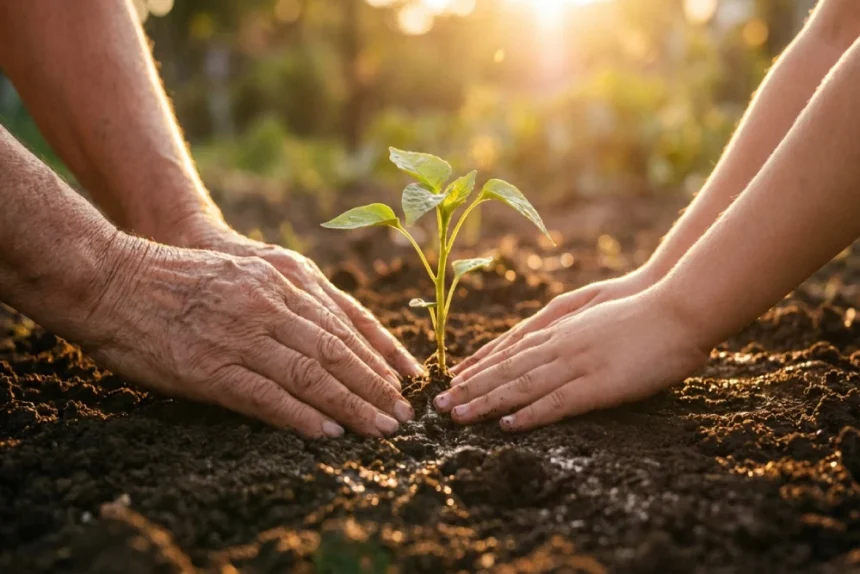
- The Strategy: Focus on micro-actions. Plant a pollinator garden. Volunteer for a local park cleanup.
- The Why: Seeing the physical result of your work (a clean park, a blooming flower) releases dopamine and buffers against climate grief.
3. Find Your “Climate Community”
Isolation is the fuel for eco-anxiety. When you sit alone with these scary thoughts, they grow.
- The Strategy: Join a Climate Café (a supportive space to talk feelings, not policy) or a local advocacy group.
- The Why: Finding others who “get it” validates your reality. You realize you aren’t carrying the burden alone; you are part of a team.
4. Grounding Techniques for Acute Panic
When you spiral, your brain is time-traveling to a terrifying future. Grounding pulls you back to the safety of the present moment.
- The Strategy: Try the 5-4-3-2-1 Method. Acknowledge 5 things you see, 4 you can touch, 3 you hear, 2 you smell, and 1 you taste.
- The Why: This forces your prefrontal cortex to come back online, turning off the alarm bells.
Navigating Relationships: Talking Without Fighting
One of the hardest parts of eco-anxiety is feeling like the people around you—parents, friends, partners—don’t care.
If you feel angry that they aren’t panicking, take a breath. Often, their apathy is actually a defense mechanism. They are scared, too, so they look away.
- The Tip: Connect on values, not stats. Instead of bombarding them with graphs, say: “I’m feeling really scared about the wildfires because I love this area so much. Do you worry about that too?” Vulnerability opens doors that facts cannot.
The Bottom Line
If you take one thing away from this, let it be this: Your eco-anxiety proves that you care deeply about our home. That love is not a weakness; it is your greatest strength.
But to keep fighting for the planet, you have to treat your own mental health as a renewable resource.
So tonight, put the phone down. Go outside. Touch a leaf, look at the sky, or just take a deep, slow breath. The world needs you, but it needs you rested, grounded, and whole.
FAQs
What are the symptoms of eco-anxiety?
Common symptoms include chronic worry about environmental doom, obsessive news consumption (“doomscrolling”), and feelings of guilt or helplessness. Physical signs often mimic general anxiety, such as insomnia, racing heart, difficulty concentrating, or a low-grade fatigue that sleep doesn’t resolve.
Is eco-anxiety a diagnosable mental illness?
Not exactly. It is not classified as a disorder in the DSM-5 because most professionals view it as a rational response to a real threat. However, if it stops you from functioning, therapy can help.
How do you manage climate change anxiety?
To cope with climate distress, experts recommend setting strict “digital boundaries” to limit negative news exposure. Engaging in “micro-actions,” such as community gardening or local volunteering, builds self-efficacy. Grounding techniques, like the 5-4-3-2-1 method, can also help regulate the nervous system during moments of panic.
What is the difference between eco-anxiety and solastalgia?
While eco-anxiety is a fear of future environmental catastrophes, solastalgia is the distress caused by environmental changes happening right now in one’s home environment. It is often described as “homesickness while you are still at home,” triggered by things like local deforestation, drought, or disappearing snow.
How do I balance being informed with being happy?
Think of your attention like a budget. You don’t need to witness every disaster to be a good person. It is okay—and necessary—to look away to recharge. You cannot pour from an empty cup.
What kind of therapist should I look for?
Look for “climate-aware” therapists. These professionals understand that your fear is based on reality and won’t just tell you to “stop worrying.” Organizations like the Climate Psychology Alliance have directories.