



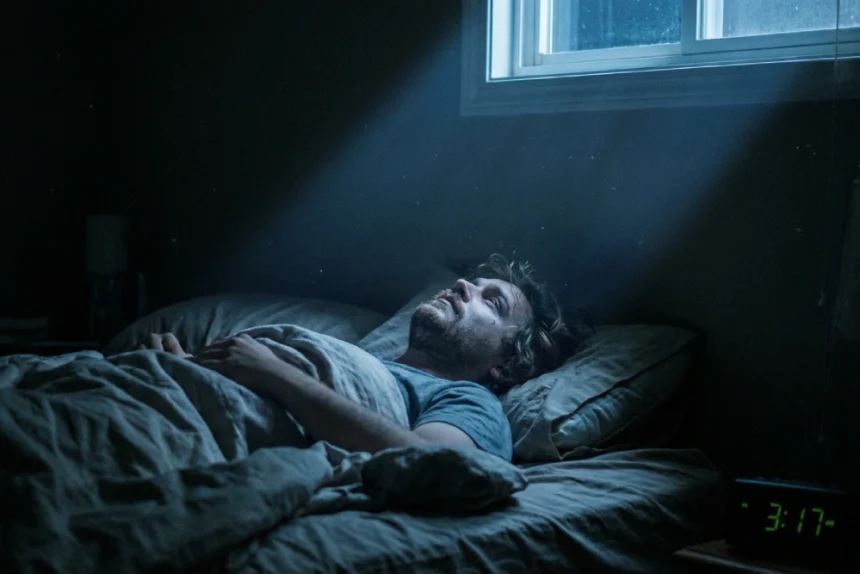
It’s 3:14 AM. The house is silent, but you are wide awake. You stare at the ceiling, body heavy but mind racing. If this scene feels familiar, you aren’t just “bad at sleeping.” You are likely navigating the complex relationship of sleep hygiene for mental health.
You are caught in the “tired but wired” trap—the tangle between insomnia and depression.
Recent numbers show that chronic insomnia affects about 10% of adults, with even more struggling with sleep-deprived anxiety. For years, we thought sleep issues were just a side effect—something that would vanish if you fixed your mood.
But modern science tells a different story. It’s a two-way street. Poor sleep doesn’t just tag along with mental health struggles; often, it fuels them. Prioritizing sleep hygiene for mental health is no longer optional; it is a critical part of recovery.
If you feel like you’re fighting a battle on two fronts, this guide is for you. Let’s look at why this happens and the science-backed CBT-I strategies to finally reclaim your rest.
The Link Between Insomnia and Depression (The “Chicken and Egg”)
For a long time, doctors viewed this as simple cause-and-effect. You’re depressed, so you sleep poorly.
However, the mental health sleep connection is much messier than that.
- The Stats: More than 90% of people with major depression report sleep disturbances. Conversely, roughly half of people diagnosed with insomnia also meet the criteria for anxiety or depression.
- The Risk: It’s not just a coincidence. Studies show that people with insomnia are twice as likely to develop depression later in life compared to good sleepers.
Think of your brain like a smartphone battery. Sleep is the charger. If you only charge your phone to 15% every night, eventually, the apps start crashing. When you ignore sleep hygiene for mental health, your brain’s ability to regulate emotions drops. You become reactive. This emotional fragility paves the way for depressive thoughts, which create anxiety… which keeps you up at night.
4 Red Flags Your Sleep Issues Are Medical
Before we try to fix your routine, we need to make sure there isn’t a hidden medical condition sabotaging you. You can’t “try harder” to fix a biological blockage. If you want to master sleep hygiene for mental health, you must rule these out first.
If any of these sound like you, skip the herbal tea and see a doctor:
1. The Snort-Gasp (Sleep Apnea)
If you choke, gasp, or stop breathing during the night, this could be Sleep Apnea. It puts massive stress on your heart and brain, making sleep hygiene for mental health almost impossible to maintain without medical treatment like a CPAP machine.
2. Restless Legs
Do you have an uncontrollable urge to move your legs at night, often accompanied by a creepy-crawly sensation? That’s likely Restless Leg Syndrome, which requires specific medical intervention.
3. The 4 AM Wake-Up
Waking up way too early and being unable to fall back asleep—especially when accompanied by dark thoughts—is a specific biological marker of severe depression.
4. Mania (Zero Need for Sleep)
If you’re sleeping 2 hours a night but feel energetic, “high,” or incredibly productive, this can be a sign of Bipolar Disorder (mania). This requires immediate medical attention, not just better habits.
3 CBT-I Strategies to Improve Sleep Hygiene for Mental Health
If you’re reading this, you’ve probably already tried the lavender spray. But when mental health is involved, we need stronger tools.
The medical gold standard is Cognitive Behavioral Therapy for Insomnia (CBT-I). It isn’t about pills; it’s about retraining your brain. Here are three core strategies to optimize your sleep hygiene for mental health.
1. The 15-Minute Rule (Stimulus Control)
This is the hardest technique, but it’s the most effective.
If you get into bed and haven’t fallen asleep after about 15 or 20 minutes (don’t watch the clock, just guess), get up. Go to another room. Keep the lights dim. Read a boring book until you feel sleepy again. Only then should you return to bed.
The Logic: Right now, your brain associates your bed with struggle, math, and anxiety. To improve sleep hygiene for mental health, you need to retrain your brain that Bed = Sleep. Staying in bed while frustrated just strengthens the link between your pillow and panic.
2. Sleep Restriction (Consolidating Rest)
It seems backward to restrict sleep when you’re tired, but hear me out. People with insomnia often spend 9 or 10 hours in bed trying to “catch” sleep, but only actually snooze for 5. This leads to fragmented, poor-quality rest.
- The Strategy: Temporarily limit your time in bed to match the amount of time you actually sleep. For example, if you only sleep 6 hours, only stay in bed for 6 hours.
- The Result: This builds up “sleep pressure.” It makes you tired enough to fall asleep faster and stay asleep longer. This is a powerful tool in sleep hygiene for mental health protocols.
(Note: It’s best to do this with a therapist or a CBT-I app like Sleepio).
3. The “Buffer Zone”
You can’t go from 60 mph to 0 mph in two seconds. You can’t go from a stressful work email to deep sleep instantly.
You need a cool-down lap. Create a 30-to-60-minute buffer zone before bed.
- The Rule: No work, no difficult conversations, and ideally, no doom-scrolling.
- The Replacement: Do something analog. Read fiction (save the self-help for the daytime) or listen to an audiobook. You’re signaling to your nervous system that the day is over and it is safe to power down.
When to Seek Professional Help
Sometimes, a blog post isn’t enough. And that is okay. Sleep hygiene for mental health sometimes requires a team approach.
- Digital Help: You don’t always need a specialist in your zip code. The NHS and other health bodies now recognize app-based CBT-I programs as effective alternatives.
- Combined Treatment: If your depression is moderate to severe, habits alone might not cut it. Guidelines often recommend combining medication (to stabilize your mood) with therapy (to build skills). There is no shame in using medication to build a floor under your feet so you can start the work of therapy.
The Bottom Line
We need to be honest about the stakes. The combination of severe insomnia and depression is heavy, and it can increase the risk of hopelessness.
But please know this: Insomnia is treatable.
You aren’t broken. You’re dealing with a biological glitch that can be fixed. Improving sleep hygiene for mental health isn’t a sprint. It’s a slow, gentle walk. It involves unlearning old habits and treating your brain with the same care you’d treat a tired child.
Tonight, try the buffer zone. Put the phone away. Be gentle with your racing mind. The road to better mental health is paved with rest, and you deserve to find it.
FAQs
How are sleep and mental health connected?
The relationship is bi-directional. Poor sleep depletes the brain’s ability to regulate emotions, increasing vulnerability to anxiety and depression. Conversely, mental health struggles often trigger the “fight or flight” response, making it difficult to sleep. Studies show people with insomnia are twice as likely to develop depression.
What is the best treatment for insomnia and depression?
Cognitive Behavioral Therapy for Insomnia (CBT-I) is the medical gold standard. Unlike sleep medication, which can have side effects, CBT-I retrains the brain to associate the bed with sleep rather than anxiety. It uses techniques like stimulus control and sleep restriction to rebuild the body’s natural sleep drive.
What is the “15-Minute Rule” for sleep?
The 15-Minute Rule (Stimulus Control) states that if you cannot fall asleep within roughly 15 minutes, you should get out of bed and go to another room. Do a quiet, low-light activity until you feel sleepy, then return. This breaks the psychological association between your bed and the frustration of being awake.
Can fixing sleep hygiene cure depression?
While improving sleep hygiene is a critical part of recovery, it may not “cure” moderate to severe depression on its own. However, restoring sleep improves emotional resilience and cognitive function, making other treatments—like therapy and medication—more effective. For many, treating the sleep issue significantly reduces depressive symptoms.
Disclaimer: This blog post is for informational purposes only and does not constitute medical advice. If you are experiencing severe depression or suicidal thoughts, please reach out to a mental health professional or contact the 988 Suicide & Crisis Lifeline (in the U.S.) or your local emergency services immediately.