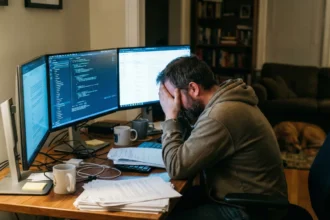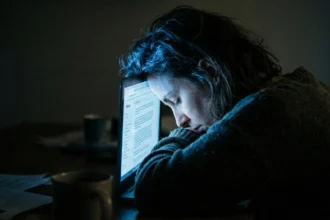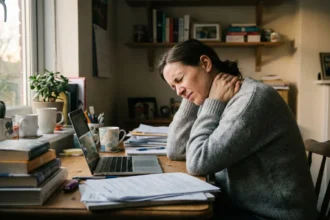



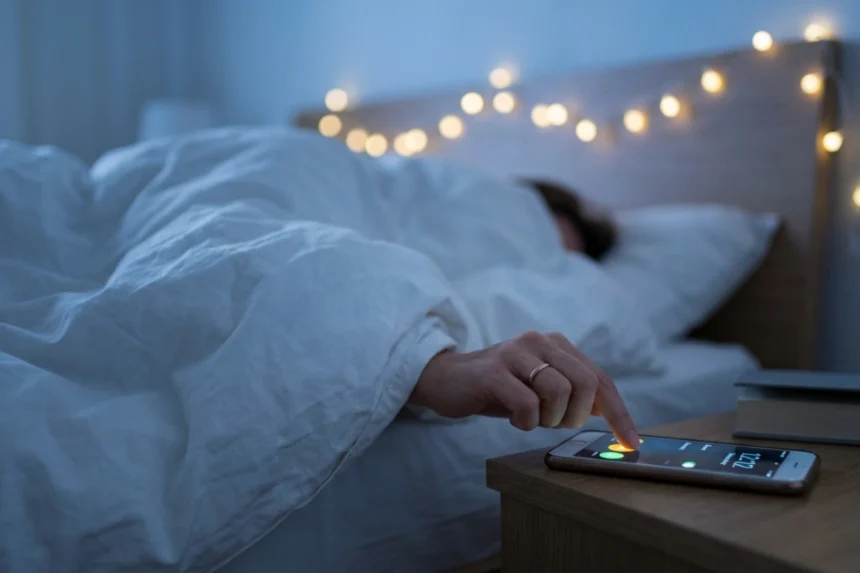
It’s 7:00 AM on a Tuesday. Your alarm goes off, but your body feels like it’s glued to the mattress. You aren’t just sleepy—you feel a deep, heavy exhaustion that even a second cup of coffee can’t quite fix.
If your holiday sleep schedule has collapsed and you feel like you’re walking through water, I want you to know: You aren’t alone. And you aren’t lazy.
December is uniquely designed to mess with the biological rhythms that keep us energized. It isn’t just the stress of gift-shopping or a busy calendar; it is a fundamental clash between your biology and your behavior.
Here is why your internal clock stops ticking correctly this month, and how to gently wind it back up.
What Is Social Jetlag? (The Real Reason You’re Tired)
We usually blame our December fatigue on staying up too late wrapping gifts. But the real culprit is something sleep scientists call Social Jetlag.
Ideally, your body wants a boring, predictable routine. But during the holidays, your routine goes out the window. You might stay up until midnight on Friday for a party, sleep in until 10:00 AM on Saturday, then try to force yourself back to a 6:00 AM wake-up on Monday.
Your body doesn’t know you were at a dinner party; it just knows the sun came up at the “wrong” time. This erratic behavior wrecks your holiday sleep schedule.
Research shows that shifting your sleep window by just two hours creates the physiological equivalent of flying across time zones. You are living in a constant state of jet lag, without ever getting on a plane.
Why Your Holiday Sleep Schedule Collapses in Winter
It’s not just your calendar that changes in December; it’s your environment. Two major factors conspire to ruin your rest.
The Light Starvation Problem
To understand the fatigue, you have to look at the light. Your brain basically runs on solar power. It relies on sunlight to signal your circadian rhythm to produce cortisol (which wakes you up) and serotonin (which boosts your mood).
In December, the days are short. You might wake up in the dark, drive to work in the dark, and leave the office in the dark.
According to Harvard Health, without that morning blast of natural light, your holiday sleep schedule drifts. Your brain never gets the “GO” signal it needs to start the day. To make matters worse, the glow of Christmas trees and late-night online shopping delays melatonin, leaving you in a biological twilight zone.
The “Loose Cable” Effect (Alcohol & Diet)
Think of your sleep cycle like charging your phone. In a normal month, you plug your phone in at 10:00 PM and unplug it at 6:00 AM. It hits 100%.
In December, your habits act like a loose charging cable. You plug it in, but the connection flickers.
- Alcohol: A festive cocktail might knock you out quickly, but studies show it disrupts your deep REM sleep later in the night.
- Temperature: Rich, heavy meals raise your body temperature. To sleep deeply, your body needs to cool down.
You might be in bed for eight hours, but because of that “loose cable,” your holiday sleep schedule leaves you with a battery charged to only 60%.
Save this for later!
Pin this article so you can revisit these tips when the “New Year” exhaustion hits in January.
3 Gentle Ways to Reset Your Holiday Sleep Schedule
You don’t need to become a hermit to fix this. You just need to give your body a few sturdy anchors to hold onto amidst the chaos.
1. Anchor Your Wake Time
I know, sleeping until noon on a Sunday sounds amazing. But it actually makes the social jetlag worse.
To fix your holiday sleep schedule, consistency is key. Try to wake up within one hour of your normal time, even on weekends. If you are totally wrecked, take a 20-minute nap in the afternoon rather than sleeping in. This keeps your body set to the right time zone so Monday morning doesn’t feel like a car crash.
2. Get “Light Snacking” in the Morning
Since you can’t control the sunset, you have to maximize the sunrise.
Within the first hour of waking up, try to get bright light into your eyes. Open the curtains immediately. Better yet, step outside for 10 minutes. Even on a cloudy December day, natural light is significantly brighter than your indoor bulbs. It screams at your brain: “Wake up! The day has started!” helping to lock in your holiday sleep schedule.
3. Create a 30-Minute Buffer Zone
December evenings are loud. You go from a party or a stressful budgeting session straight to bed, and then wonder why your brain won’t shut off.
You need a transition. Create a 30-minute “Buffer Zone” before sleep.
- Dim the lights: Mimic the sunset your body missed.
- Put the phone away: Give your eyes a break from the blue light.
- Warm to Cool: Take a warm shower. When you step out, your body temperature rapidly drops, which mimics the natural physical drop needed for sleep.
When It’s More Than Just Tiredness
While being “holiday tired” is normal, it shouldn’t be debilitating.
If your exhaustion follows you well into January, or if you notice symptoms like loud snoring or gasping for air at night, it might be more than just a broken holiday sleep schedule. Conditions like Sleep Apnea or Seasonal Affective Disorder (SAD) often flare up now. If you can’t shake the fatigue, it’s worth a chat with your doctor.
FAQs
Why am I so tired in December?
You feel tired in December primarily due to “social jetlag“—a mismatch between your biological clock and erratic holiday schedules. Additionally, the lack of morning sunlight disrupts your circadian rhythm, while late-night artificial light suppresses melatonin, leaving your body in a constant state of biological lag despite getting enough hours of sleep.
What is social jetlag?
Social jetlag is the discrepancy between your body’s internal biological clock and your social schedule. It typically occurs when you shift your sleep and wake times by two hours or more on weekends compared to weekdays. This misalignment mimics the physical exhaustion of travel jet lag, leading to fatigue and mood dips.
How can I fix my sleep schedule during the holidays?
To fix your holiday sleep schedule, anchor your wake-up time by getting up within one hour of your normal time every day, even after late nights. Expose yourself to bright natural light immediately upon waking to reset your circadian rhythm, and avoid heavy meals or bright screens 30 minutes before bed.
Does alcohol affect sleep quality?
Yes. While alcohol may help you fall asleep faster because it is a sedative, it significantly disrupts sleep quality later in the night. It blocks REM sleep (the restorative stage of sleep) and can cause fragmented waking, leaving you feeling unrefreshed the next morning despite being in bed for a full eight hours.
The Bottom Line
If your holiday sleep schedule has collapsed this month, please be kind to yourself. You are fighting against biology, weather, and social pressure all at once.
You don’t need to be perfect. You just need to be consistent.
By anchoring your wake-up time and stealing a few moments of morning light, you can stabilize your internal clock. You might not hit 100% battery every single day, but you’ll have enough energy to actually enjoy the season, rather than just sleeping through it.
- Disclaimer: The information provided in this blog post regarding sleep schedules, social jetlag, and seasonal fatigue is for educational and informational purposes only and does not constitute medical advice, diagnosis, or treatment. Always seek the advice of your physician or other qualified health provider with any questions you may have regarding a medical condition or sleep disorder. Never disregard professional medical advice or delay in seeking it because of something you have read on this website.