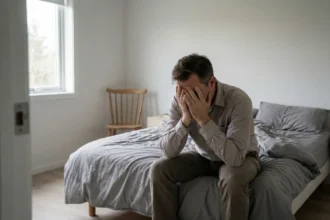




It’s mid-December. You’re drowning in deadlines and family logistics, and suddenly you notice a painful breakout, or you realize your cycle is late. The connection between holiday stress and your period is real, and it’s hitting you right when you least expect it.
It’s easy to brush this off as just “being emotional” or “eating too much sugar.”
But there is a real, biological reason why your cycle feels different this month. December creates a perfect storm of pressure that can hijack your hormones. It isn’t that you’re failing at life; it’s that your body is prioritizing survival over reproduction.
Here is the science behind holiday stress and your period, and how to help your hormones find their way back to balance.
You Aren’t Imagining It: The Link Between Holiday Stress and Your Period
Before we get into the biology, let’s validate what you’re feeling. If your body feels like it’s going haywire, you are definitely not alone.
Studies show that roughly 40% of women report a massive spike in anxiety during the holidays. Unfortunately, the link between holiday stress and your period is strong because your reproductive system is usually the first thing to react to pressure.
Research paints a clear picture:
- Irregularity: High stress doubles the odds of your cycle showing up late (or early).
- Pain: Feeling stressed can increase the risk of painful cramping by 2 to 4 times.
- Missing Ovulation: For every notch your daily stress goes up, the odds of skipping ovulation jump by 70%.
Your body is keeping score, and the scoreboard is your menstrual cycle.
The Biology: How the “Cortisol Steal” Wrecks Your Cycle
To understand the chaos of holiday stress and your period, you have to look at the war between your stress hormones and your sex hormones.
Your body treats stress—whether it’s running from a bear or navigating a tense dinner with your in-laws—as a survival emergency. When you’re stressed, your adrenal glands pump out cortisol.
Here is the catch: Your body has a hierarchy of needs. Survival comes first; making a baby comes second.
When cortisol stays high (like during a chaotic December), your body enters a state of “resource rationing.” It essentially thinks, “We are in danger. Now is a terrible time to reproduce.”
To keep you going, your body may divert raw materials away from producing progesterone—the hormone that keeps you calm—to make more cortisol. This mechanism is often colloquially called the “cortisol steal,” and it is the primary driver behind holiday stress and your period issues.
3 Signs of Hormonal Chaos in December
When progesterone drops due to stress, it leaves your other main hormone, estrogen, unchecked. You need both to be balanced, but December often tips the scales.
1. Estrogen Dominance (The Heavy Flow)
Think of progesterone as nature’s Valium. It’s soothing and reduces inflammation. Estrogen is the “growth” hormone—it gives you energy and builds up the uterine lining.
When holiday stress and your period collide, you often end up with Estrogen Dominance. Too much estrogen builds a thicker uterine lining, which means heavier bleeding and more painful cramping when it finally sheds.
2. The “Ghost” Cycle (Anovulation)
Sometimes, the stress is high enough that your brain simply cancels the main event.
Severe stress can stop you from ovulating entirely. This is called an anovulatory cycle. You might still bleed later in the month, but it isn’t a true period—it’s just a withdrawal bleed.
These “ghost cycles” are a common symptom of holiday stress and your period. They might arrive a week late, last longer than usual, or be surprisingly light. Research looking at high-stress periods found a 7.7% increase in these skipped cycles.
3. PMS Rage and Insomnia
Without the calming influence of progesterone, normal irritability turns into severe mood swings. Furthermore, progesterone is what helps you stay asleep. When it tanks due to stress, you find yourself staring at the ceiling at 3:00 AM, wondering why you can’t rest.
Save this for later!
Pin this article so you remember these symptoms the next time you feel “off” during the holidays.
How to Fix Holiday Stress and Your Period Problems
You can’t cancel December. But you can send safety signals to your body to let it know you aren’t in actual danger.
1. Breakfast is Non-Negotiable
To stop the cortisol rollercoaster, you need to stabilize your blood sugar first thing in the morning.
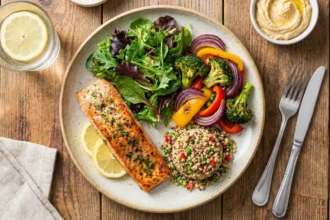
- The Fix: Eat protein within an hour of waking up. Eggs or Greek yogurt tell your body that food is plentiful and stable, which calms the adrenal response and mitigates the impact of holiday stress and your period.
2. The 10:00 PM Boundary
Your hormones replenish while you sleep. Cortisol naturally lowers at night to let melatonin rise. If you’re staring at blue light or working until midnight, cortisol stays high, suppressing your reproductive hormones.
- The Fix: Try to be in bed, lights out, by 10:00 PM—even if it’s just for this month.
3. Magnesium is Your Best Friend
Magnesium is vital for clearing out excess estrogen and producing progesterone. Unfortunately, stress burns through your magnesium stores like fuel.
- The Fix: Add a magnesium glycinate supplement or take a hot Epsom salt bath. It physically lowers cortisol and helps relax the cramps associated with holiday stress and your period.
When to Call a Doctor
While a wonky cycle in December is common, your body shouldn’t be a total mystery.
If you miss your period for three months in a row, if the pain keeps you home from work, or if you notice sudden hair loss, go see a healthcare provider. These can be signs of things like PCOS or thyroid issues that need real medical care beyond managing holiday stress and your period.
The Bottom Line
If you feel hormonal chaos this month, please don’t blame yourself for eating a cookie or feeling overwhelmed.
Your body isn’t trying to punish you. It’s doing exactly what it was designed to do: It’s trying to protect you from an environment it thinks is dangerous.
So, be gentle with yourself. Support your system with rest and food, and trust that the issues with holiday stress and your period will resolve when the season settles down.
FAQs
Can holiday stress delay your period?
Yes. High levels of stress trigger the release of cortisol, which can signal the hypothalamus to delay or suppress ovulation. If ovulation occurs later than usual (or not at all), your period will be delayed. This is a common biological survival response to “unsafe” or high-pressure environments.
Why are my cramps worse in December?
Worsening cramps often result from “estrogen dominance.” Chronic stress depletes progesterone (a natural anti-inflammatory) while leaving estrogen unchecked. Excess estrogen builds a thicker uterine lining, leading to heavier bleeding, more intense cramping, and increased inflammation when the lining sheds.
What is the “cortisol steal”?
The “cortisol steal” describes the biological process where the body prioritizes survival over reproduction. During high stress, the body uses resources to produce cortisol (the stress hormone) rather than progesterone (the calming sex hormone). This leads to hormonal imbalances, mood swings, and sleep disruption.
Does eating sugar affect my menstrual cycle?
Yes. Consuming high amounts of sugar and alcohol spikes insulin. Consistently high insulin can stimulate the ovaries to produce excess testosterone, which disrupts ovulation and can cause acne, mood instability, and irregular cycles, especially in women with insulin sensitivity or PCOS.
Disclaimer: This article is for informational purposes only and is not a substitute for professional medical advice. Always consult with a gynecologist or endocrinologist regarding significant changes in your menstrual cycle.