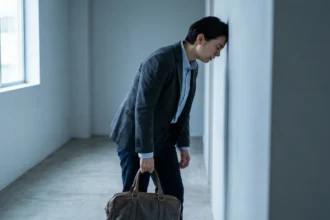




You’re standing in line at the grocery store. Your cart is full of ingredients for a meal you don’t even want to cook. Your phone buzzes with another family group chat notification.
Suddenly, you feel it—the tightening in your chest, the shallow breathing, the urge to abandon the cart and just walk out the door. If you are struggling with holiday anxiety, I want you to know something important: You aren’t failing. You’re just human.
According to the American Psychological Association, 41% of us feel more stressed during this season. We talk about coping with holiday stress like it’s bad weather—something that just happens to us. But anxiety is a loop between your brain and your body.
The good news? You don’t need an hour of meditation to find anxiety relief. Science suggests you can use “micro-habits” to send a powerful signal of safety to your nervous system. Here are three evidence-backed ways to lower the volume on holiday anxiety today.
The Science of Holiday Anxiety (You Aren’t Alone)
When holiday anxiety hits, it hits your body first. You might notice your shoulders touching your ears or a knot forming in your stomach. This is often the result of sensory overload and high expectations colliding.
Trying to “think” your way out of this usually backfires. You can’t logic away adrenaline; you have to breathe it away. To manage stress levels effectively, you need to speak your body’s language.
3 Micro-Habits to Reduce Holiday Anxiety Quickly
These strategies take less than two minutes and are designed to interrupt the stress response in real-time.
1. The Physiological Sigh (Biological Brake Pedal)
The Science:
A 2023 study found that “cyclic sighing” can improve your mood better than mindfulness meditation in the moment. It effectively offloads carbon dioxide and slows down your heart rate. Think of it as your body’s biological brake pedal for holiday anxiety.
The Habit:
- Step 1: Inhale deeply through your nose to fill your lungs.
- Step 2: Without exhaling, take a second, sharp inhale to pop open the air sacs in your lungs.
- Step 3: Exhale slowly and fully through your mouth (like you’re blowing through a straw) until your lungs are empty.
Try It:
Do this three times before walking into a party or while wrapping gifts. It takes about 15 seconds to reset your baseline.
2. The “Have To” Swap (Cognitive Reframing)
Holiday anxiety is often fueled by a loss of control. We feel trapped by obligations. Your internal monologue probably sounds like this: “I have to bake these cookies. I have to go to this party. I have to buy a gift for my boss.”
While saying “have to” doesn’t magically spike your cortisol overnight, patterns of low control are linked to higher stress over time.
The Science:
A 2024 review found that even a single session of cognitive reappraisal (changing how you view a situation) can reduce anxiety. You don’t need months of practice to feel a difference; one shift can help.
The Habit:
Catch yourself saying “have to” and swap it for “choose to.”
- Old Thought: “I have to go to this neighborhood potluck.”
- New Thought: “I choose to go for one hour because I value my friendship with the host.”
Save this for later!
Pin this section so you remember this script the next time you feel overwhelmed by your to-do list.
Why it works:
This tiny linguistic shift reminds your brain that you have agency. You aren’t a victim of your schedule; you are the architect of it.
3. The Sensory Air-Lock (Grounding)
The holidays are loud. Flashing lights, constant music, crowded shops, and overlapping conversations create a state of sensory overload.
For many people, what feels like holiday anxiety is actually just the brain struggling to filter out the noise.
The Science:
Noise is a genuine health risk. Studies link environmental noise (like traffic) to higher risks of heart issues. Your brain works hard to process sound, and sometimes, it just needs a break.
The Habit:
Create a “Sensory Air-Lock.” Recent surveys show that 34% of people naturally take short breaks to cope with holiday stress. Make it a deliberate ritual.
How to do it:
When you feel the buzz of anxiety rising, excuse yourself. Go to a bathroom, your car, or a quiet bedroom.
- Turn off the lights.
- Put in earplugs or cover your ears.
- Close your eyes.
- Sit in stillness for 120 seconds.
It acts as a “hard reset” for your sensory processing system. By cutting the input, you allow your brain to catch up.
When to Seek Help for Holiday Anxiety
These micro-habits are powerful tools for situational stress—the kind caused by burning the turkey or dealing with in-laws.
However, they aren’t a cure-all. If your holiday anxiety feels unmanageable, if you can’t sleep, or if the feeling of dread won’t lift, please talk to a professional. There is no shame in getting support.
FAQs
What causes holiday anxiety?
Holiday anxiety is often triggered by a combination of sensory overload (noise, crowds, lights), financial pressure, and a loss of personal autonomy due to social obligations. The American Psychological Association notes that 41% of adults experience increased stress during this season, often manifesting as physical tension and mental fatigue.
How can I calm down quickly during a stressful event?
To calm down instantly, use the “physiological sigh.” Inhale deeply through your nose, take a second shorter inhale to fully inflate the lungs, and then exhale slowly through your mouth. Research shows this pattern lowers heart rate and offloads carbon dioxide more effectively than standard deep breathing.
What is cognitive reframing for stress?
Cognitive reframing is a psychological technique where you change your perspective on a stressor. For holiday anxiety, this involves swapping “I have to” with “I choose to” (e.g., “I choose to attend this party for an hour”). This shift restores a sense of agency and reduces the brain’s threat response.
How do I handle sensory overload at parties?
To manage sensory overload, practice a “Sensory Air-Lock.” Remove yourself from the stimulating environment for two minutes. Find a quiet space (like a bathroom or car), turn off the lights, and cover your ears. This brief period of deprivation allows your brain to reset its processing baseline.
The Bottom Line
You aren’t failing the holidays if you feel anxious. You are simply navigating a high-pressure, high-volume environment.
The goal isn’t to be perfectly calm every second of December. The goal is to notice when the spiral starts and use these micro-habits to catch yourself.
Take a breath. Reframe the thought. Step into the quiet for a moment. You are doing the best you can to manage your holiday anxiety, and that is enough.
- Disclaimer: The information provided in this blog post regarding anxiety, stress management, and mental health is for educational and informational purposes only and does not constitute medical advice, diagnosis, or treatment. These strategies are intended for situational stress and are not a cure for anxiety disorders. Always seek the advice of your physician, therapist, or other qualified mental health provider with any questions you may have regarding a medical condition. If you are experiencing a mental health crisis or thoughts of self-harm, please call or text 988 (in the US) or contact your local emergency services immediately.