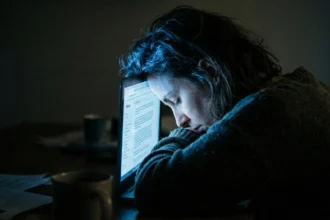




You know that heavy feeling when you wake up in mid-December? Even after eight hours of sleep, your limbs feel like lead. If you are battling holiday fatigue, you aren’t being lazy. You are experiencing a real physiological crash.
Millions of people find themselves asking, “Why am I so tired?” right now. This holiday fatigue feels like your internal battery is stuck at 10%, and no amount of coffee can fully charge it.
You are part of the statistical majority. Surveys show that 57% of people rank the holidays as the most draining time of year. There is a biological storm happening inside you. Here is the simple science behind holiday fatigue, and how to hack your biology to get your energy back.
What Is Holiday Fatigue? (It’s Not Just Stress)
Holiday fatigue isn’t a made-up excuse. It’s a real physiological condition caused by something doctors call “Allostatic Load.”
Think of your energy like a backpack. On a normal day, you carry a few books. During the holidays, you add the weight of late nights, sugar, family pressure, and financial stress.
According to the Mayo Clinic, when this “wear and tear” accumulates without recovery, your body enters a state of chronic strain. This isn’t just “feeling busy.” High allostatic load is linked to a decline in cognitive function and physical exhaustion. Your body is tired because it’s carrying a backpack that’s three times heavier than usual.
4 Biological Causes of Holiday Fatigue
To fix the exhaustion, you have to identify the biological triggers causing it.
1. Allostatic Load (The Heavy Backpack)
As mentioned, holiday fatigue is often the result of cumulative stress. When you are in a constant state of “fight or flight” (navigating malls, budgets, and travel), your body pumps out cortisol. Eventually, your system stops rebounding, leaving you feeling “tired but wired.”
2. The Sugar Crash (Myth vs. Reality)
Take a look at the holiday treat table. We usually eat cookies and candy for a “sugar rush” to keep us going, but science says this actually worsens holiday fatigue.
A major meta-analysis found that consuming sugar does not improve mood or alertness. In fact, it lowers alertness within 60 minutes and increases fatigue within 30 minutes. When you eat simple sugars, your blood glucose spikes, and your pancreas overcompensates with insulin, causing a crash. This puts your body on an exhausting biological rollercoaster.
3. Social Jetlag (The Sleep Shift)
You don’t have to fly to Paris to get jetlag. You can get it right in your living room.
Your body runs on a Circadian Rhythm. During the holidays, this clock gets confused because you stay up late Friday, sleep until noon Saturday, and force yourself up early Monday.
Sleep scientists call this Social Jetlag. Studies show that shifting your sleep window by just 2 to 3 hours creates metabolic chaos. Your body doesn’t know what time zone it lives in, leading to the deep brain fog characteristic of holiday fatigue.
4. The Winter Factor (SAD)
We can’t ignore the weather. In the Northern Hemisphere, the holidays coincide with the darkest days of the year.
Sunlight helps your brain produce serotonin (mood) and regulates melatonin (sleep). About 15–20% of people experience the “winter blues.” When you leave work in the dark, your brain produces melatonin too early. You aren’t just bored; your brain is chemically trying to put you to sleep at 5:00 PM.
Save this for later!
Pin this article so you can remember these tips before the New Year’s crash hits!
3 Biological Hacks to Fix Holiday Fatigue
You don’t have to cancel Christmas to feel better. You just need to support your biology to fight off holiday fatigue.
1. Feed Your Brain Light
Since your brain is starving for light, feed it. Try to step outside for 10 to 15 minutes within an hour of waking up.
- Why: This signals your internal clock to stop making melatonin (sleepy hormone) and start making cortisol (awake hormone) at the right time.
2. The “Water Sandwich”
Holiday parties often involve alcohol. Alcohol is a sedative, so it helps you fall asleep, but it ruins the quality of your sleep by blocking restorative REM cycles.
- The Fix: For every alcoholic drink, drink one glass of water. It won’t perfectly fix your sleep cycles, but it reduces dehydration, a major cause of next-day holiday fatigue.
3. Anchor Your Wake-Up Time
It is incredibly tempting to sleep in on weekends to “catch up,” but this actually worsens Social Jetlag.
- The Fix: Try to wake up within one hour of your normal time, even after a late night. You can take a short nap (20 minutes) later if you need it, but keeping your wake-up time steady keeps your biological clock set to the right time zone.
FAQs
What causes holiday fatigue?
Holiday fatigue is primarily caused by allostatic load—the cumulative wear and tear on the body from chronic stress, financial pressure, and sleep disruption. Biological factors like “social jetlag” (shifting sleep schedules) and reduced winter sunlight also disrupt circadian rhythms, leading to deep physical exhaustion and brain fog.
Does sugar make you tired?
Yes. Contrary to the “sugar rush” myth, research shows that consuming high amounts of sugar actually lowers alertness within 60 minutes and increases fatigue. This occurs because blood glucose spikes trigger a rapid insulin response, leading to a “crash” (reactive hypoglycemia) that leaves you feeling drained and lethargic.
What is social jetlag?
Social jetlag is the discrepancy between your body’s internal biological clock and your social schedule. It typically happens during the holidays when you stay up late for events on weekends and wake up early on weekdays. This shifts your circadian rhythm by 2–3 hours, creating metabolic chaos similar to travel jet lag.
How can I stop feeling drained during the holidays?
To stop feeling drained, prioritize morning sunlight to regulate melatonin, hydrate effectively (especially when drinking alcohol), and anchor your wake-up time within one hour of your normal schedule every day. Stabilizing blood sugar by pairing sweets with protein also prevents the energy crashes associated with seasonal fatigue.
The Bottom Line
If you’re exhausted right now, please be kind to yourself. You are fighting against biology, weather, and chemistry all at once.
Holiday fatigue is real, but your body is resilient. By giving it a little more light, stabilizing your sugar intake, and keeping a consistent sleep schedule, you can recharge that battery. You deserve to actually enjoy the season, not just sleep through it.
Disclaimer: This article is for informational purposes only and is not a substitute for professional medical advice. If you experience chronic fatigue that does not go away with rest, please consult a healthcare provider.