



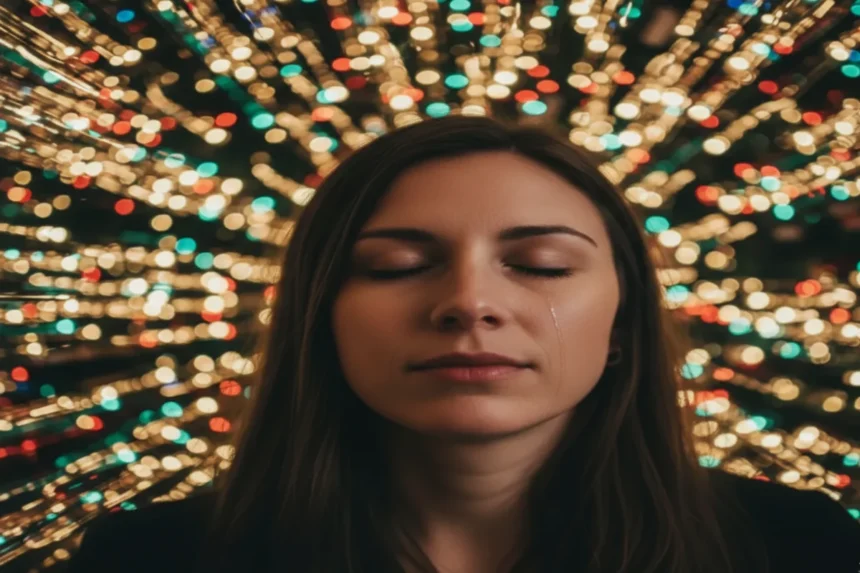
It’s 5:00 PM on a Tuesday. You’re standing in the checkout line, and suddenly, a cheesy song makes you want to cry. Or maybe someone asks about dinner, and you feel a flash of rage. If you are battling intense holiday mood swings, you aren’t losing your mind.
If you feel like you’re losing control, I have good news: You aren’t broken. And you definitely aren’t alone.
According to the American Psychological Association, 89% of adults feel stressed right now. But holiday mood swings aren’t just about your budget or busy calendar. They are about biology.
As the year ends, your body navigates a perfect storm of hormonal shifts and light deprivation. Here is the science behind why you face these holiday mood swings right now, and how to get off the rollercoaster.
The Science of Holiday Mood Swings (You Aren’t Broken)
The biggest reason you feel weepy isn’t your to-do list; it’s the sun. Or rather, the lack of it.
In the Northern Hemisphere, late December brings the shortest days of the year. Your body relies on sunlight to set its internal clock. When you combine darkness with stress, you get a biological crash that manifests as holiday mood swings. You aren’t “just being dramatic”—your brain is physically struggling to regulate emotion.
4 Biological Reasons You Feel So Emotional
Here are the four specific mechanisms turning your brain into a pressure cooker this month.
1. Your Internal Clock is Lagging (Melatonin)
Your body relies on sunlight to regulate your circadian rhythm. When it gets dark, your brain produces melatonin, the hormone that makes you sleepy.
The Science:
Research shows that in winter, our biological clock experiences a “phase delay” of about 30 minutes. Basically, your internal clock is running late. To make matters worse, studies show that 17% of people have abnormal melatonin profiles in winter. You aren’t just “tired”—your brain is chemically trying to put you to sleep at 5:00 PM, lowering your emotional defenses and triggering holiday mood swings.
2. The Happiness Dip (Serotonin)
Sunlight does more than wake you up; it boosts serotonin. Think of serotonin as your brain’s shock absorbers. In the summer, they are bouncy and new. In the winter? They’re worn thin.
The Mayo Clinic notes that reduced sunlight causes a drop in serotonin activity. In fact, 38% of people report a noticeable mood decline during the winter months (“winter blues”). Without those shock absorbers, every emotional bump in the road feels like a car crash, exacerbating holiday mood swings.
The Gender Gap:
This hits women harder. Data shows that 44% of women report increased holiday stress compared to 31% of men. Biologically, women are 3 to 4 times more likely to suffer from seasonal mood shifts.
3. You Have “Social Jetlag”
Your biology craves a boring routine. It wants to wake up with the sun. But the holidays demand the opposite. We stay up late for parties on Friday, sleep in until noon on Saturday, and drag ourselves out of bed in the pitch black on Monday.
This mismatch is called “Social Jetlag.” It affects up to 60% of us. When you shift your sleep window by just two hours, it confuses your cortisol (stress hormone). You end up feeling “tired but wired,” which is a primary driver of holiday mood swings.
4. When It’s More Than the Blues (SAD)
For millions of people, these shifts turn into Seasonal Affective Disorder (SAD).
SAD affects about 5% of U.S. adults, while another 20% get the milder “winter blues.” The hallmark isn’t just sadness; it’s carb cravings. Your body screams for pasta and cookies because they give you a temporary serotonin boost. If you want to hibernate, it’s not a weakness; it’s a biological response to the dark.
(CTA: Save this for later! Pin this article so you can remember that your feelings are biological, not a character flaw.)
3 Ways to Stop Holiday Mood Swings
You can’t control the rotation of the earth, but you can give your body the signals it needs to stabilize.
1. Fake the Sun (Light Therapy)
If you can’t get natural light, buy it. Harvard Health suggests using a “light box” that emits 10,000 lux of light.
- The Fix: Sit in front of it for 20 minutes in the morning. Meta-analyses show this can lead to a 75% remission in seasonal depressive symptoms. It tricks your brain into thinking it’s a sunny day, shutting down the sleep hormones that cause holiday mood swings.
2. Watch the “Carb Crash”
When serotonin is low, you self-medicate with sugar. But the sugar crash makes holiday mood swings worse.
- The Fix: Pair your carbs with protein. Eat the cookie, but have a handful of almonds with it. This stabilizes your blood sugar, preventing the adrenaline spikes that trigger anxiety.
3. Anchor Your Wake-Up Time
To fight Social Jetlag, try to wake up at the same time every day—even on weekends. Consistency is the single best way to tell your body, “We are safe, and we know what time it is.”
The Bottom Line
If you’re crying over a commercial or feeling heavy this week, please be gentle with yourself. You are fighting against biology, lack of light, and a confused internal clock.
Holiday mood swings are valid, but they are also temporary. You aren’t broken; you’re just a human being operating on low solar power. Give your body the light and rest it’s screaming for. You’ll get through this.
FAQs
Why am I so emotional during the holidays?
Holiday mood swings are often driven by biological factors, not just stress. Shorter days reduce serotonin (the mood-regulating hormone) while increasing melatonin (the sleep hormone). This chemical imbalance, combined with “social jetlag” from erratic sleep schedules, lowers emotional resilience and increases irritability.
What is social jetlag?
Social jetlag occurs when your sleep schedule shifts significantly between weekdays and weekends (e.g., staying up late for parties). This mismatch confuses your circadian rhythm, causing metabolic chaos and a “tired but wired” feeling similar to traveling across time zones, which exacerbates mood volatility.
How does winter affect serotonin levels?
Sunlight is a primary trigger for serotonin production. In winter, the lack of bright natural light causes serotonin activity to drop, which is directly linked to feelings of sadness and anxiety. This is why many people experience the “winter blues” or Seasonal Affective Disorder (SAD) during December.
How can I stabilize my mood naturally in winter?
To stabilize mood swings, prioritize morning light exposure (using a 10,000 lux light therapy lamp) to suppress melatonin. Additionally, maintain a consistent wake-up time to regulate your circadian rhythm, and pair carbohydrates with protein to prevent blood sugar crashes that can trigger adrenaline spikes.
Disclaimer: This article is for informational purposes only and is not a substitute for professional medical advice, diagnosis, or treatment. If you feel overwhelmed, depressed, or unable to function, please consult a healthcare professional.