


It’s 3:00 PM on a Saturday. Your chest feels tight, your to-do list is a mile long, and the noise level in your house is driving you toward a breaking point. You might think you need a hardcore gym session to burn off the energy, but science suggests that walking for holiday stress is actually the superior choice.
While high-intensity workouts are great for fitness, they can sometimes spike cortisol in an already stressed body. Walking for holiday stress relief offers a neurological reset button without the burnout. Here is why lacing up your sneakers and walking out the door is the most effective medicine for a December brain.
The Science: Why Walking for Holiday Stress Wins
To understand why walking works so well right now, we have to look at your hormones. When you’re stressed—worried about money, family drama, or time—your body is flooded with cortisol. You’re basically idling in “fight or flight” mode all day.
Using walking for holiday stress management helps metabolize these hormones without demanding a massive recovery cost. It signals to your brain that you are moving forward and you are safe, allowing your nervous system to finally downshift.
The “Cortisol Ceiling”: Why Intense Cardio Backfires
High-Intensity Interval Training (HIIT) is amazing for fitness, but it also spikes cortisol acutely. If your nervous system is already red-lining, adding an intense workout can feel like “too much.” You might finish feeling depleted rather than energized.
According to the Mayo Clinic, moderate, rhythmic exercise is ideal when allostatic load (wear and tear on the body) is high. This is why swapping the boot camp for walking for holiday stress can prevent you from crashing later in the day.
3 Hidden Brain Benefits of Walking
You might think walking is “too easy” to count as mental health support. However, three specific biological mechanisms make it powerful.
1. The Magic of “Optic Flow”
Ever notice that when you’re stressed, you tend to stare at your phone or tunnel-vision on a computer screen? That’s called “focal vision,” and it’s linked to high-alert states.
Walking engages something called Optic Flow. As you walk forward, images pass by your eyes in your peripheral vision. This visual motion has a direct, quieting effect on the amygdala, the part of the brain responsible for anxiety. By using walking for holiday stress, you physically turn down the volume on your fear response.
2. Bilateral Stimulation (Therapy in Motion)
There is another reason you feel clearer after a walk. It relates to the rhythmic, left-right movement of your body. In psychology, this is known as Bilateral Stimulation, a core component of trauma therapies like EMDR.
The alternating movement helps the two hemispheres of your brain communicate. This helps you process stuck emotions and racing thoughts. It’s why you often start a walk feeling confused and angry, but finish it with a sudden solution.
(CTA: Save this for later! Pin this article so you remember the “Optic Flow” trick next time you feel a panic attack coming on.)
3. The Anti-Anxiety Stats
The data is clear. A massive 2024 analysis found that walking significantly reduces depressive symptoms. Even low doses matter: one study found that just 1,000 steps per day was linked to a 10% lower depression risk. Clinical experts note that a single 10-minute walk can relieve anxiety as effectively as a 45-minute workout, proving the value of walking for holiday stress.
3 Ways to Use Walking for Holiday Stress Relief
You don’t need a tracker or a route. Here are three specific types of walks to target seasonal overwhelm.
1. The Morning Light Walk (10 Minutes)
The Goal: Fix your sleep.
The Cleveland Clinic notes that morning light boosts serotonin and regulates melatonin. Using morning walking for holiday stress ensures you sleep better at night, which is the foundation of handling pressure.
2. The Post-Meal Digest (15 Minutes)
The Goal: Stop the sugar crash.
Studies show that walking for just 15 to 30 minutes after eating significantly lowers blood sugar spikes. This prevents the mood swing that often ruins the evening.
3. The Silent Walk (20 Minutes)
The Goal: Sensory deprivation.
We live in a state of sensory overload during December. Giving your ears a break lowers your cognitive load. Leave the headphones at home to maximize the benefits of walking for holiday stress.
The Bottom Line
If you feel like the walls are closing in this holiday season, don’t force yourself to do a punishing workout if you don’t have the energy. Your body doesn’t need punishment; it needs release.
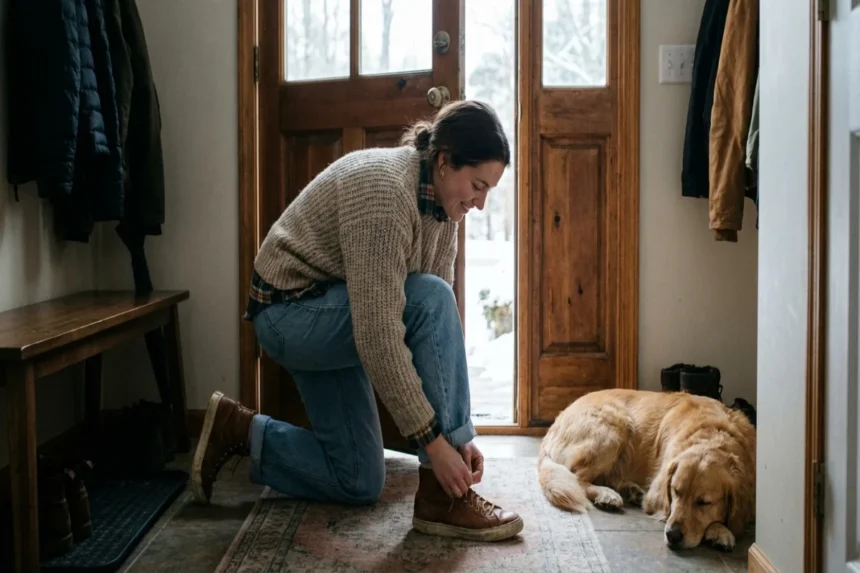
Put on your coat. Open the door. Walk down the driveway.
You’re doing something profound for your biology. By prioritizing walking for holiday stress, you are lowering your cortisol, quieting your amygdala, and processing your emotions, one step at a time. The holiday chaos will still be there when you get back, but you’ll be much better equipped to handle it.
FAQs0
How does walking reduce holiday stress?
Walking reduces holiday stress by lowering cortisol levels and engaging optic flow—a visual mechanism that quiets the brain’s fear center (amygdala). Unlike intense cardio, low-impact walking helps metabolize stress hormones without triggering a “fight or flight” response, making it ideal for managing burnout and anxiety.
Is walking better than HIIT for stress relief?
For high stress, walking is often superior. While HIIT improves fitness, it acutely spikes cortisol. If you are already experiencing high allostatic load (cumulative stress), walking provides a neurological reset and lowers anxiety scores without adding further physical strain to an exhausted nervous system.
How long should I walk to lower anxiety?
You don’t need a long hike. Clinical research shows that a single 10-minute walk can relieve anxiety and elevate mood for several hours. To regulate blood sugar and prevent mood swings after heavy holiday meals, aim for a 15 to 30-minute gentle stroll immediately after eating.
What is “optic flow” in walking?
Optic flow is the visual phenomenon of images passing by your peripheral vision as you move forward. This lateral visual motion has been scientifically proven to deactivate the brain’s threat detection circuits, naturally lowering anxiety levels and creating a physiological state of calm and safety.
Disclaimer: This article is for informational purposes only and is not a substitute for professional medical advice. Always consult with a qualified healthcare provider before beginning any new exercise program.