



Ever felt those “butterflies” in your stomach before a big presentation? Or noticed how your appetite just vanishes the moment you feel anxious? It’s not just a figure of speech—it’s actually an ancient, real-time conversation known as the gut-brain axis.
If you’ve ever felt like your digestive system has a mind of its own, you’re more right than you know. Scientists now refer to the gut as our “Second Brain,” and unlocking the secrets of the gut-brain axis is the key to better moods and sharper focus. Understanding this gut-brain connection helps explain why a stressful day at work can lead to a stomach ache, or why a poor diet can leave you feeling mentally foggy.
Save this for later
You’ll want to come back to these insights regarding the gut-brain axis the next time you’re feeling “hangry” or stuck in a mental fog.
The Secret Highway: Vagus Nerve Communication
Think of the Vagus Nerve as a massive, high-speed fiber optic cable running from your brain stem straight down to your abdomen. This is the main line of vagus nerve communication for the gut-brain axis. It serves as the physical bridge that allows your organs to send status reports to your cognitive center.
For a long time, we assumed the brain was the one barking all the orders. However, research published in Nature Reviews Neuroscience suggests something surprising: a staggering 80–90% of the information is actually going upward. Essentially, your digestive system is constantly “gossiping” to your brain about how it feels. When your gut is happy, it sends signals of safety. But if it’s inflamed or struggling, those signals can make you feel irritable or scattered. It’s why 70–80% of people with IBS also deal with regular bouts of anxiety.
The Happiness Chemical: Serotonin Production in the Gut
We usually think of serotonin—the “feel-good” chemical—as something strictly happening in our heads. But here’s a mind-blowing fact regarding the science of the gut-brain axis: about 95% of your body’s serotonin is actually produced in your gut.
According to Healthline, specialized cells in your gut lining churn out this neurotransmitter to keep your digestion moving. While this specific serotonin production in the gut doesn’t cross the “blood-brain barrier” directly, it acts like a massive signaling center. It tells your nerves exactly what to report back to home base. It is one of the most powerful mechanisms within the gut-brain axis. When your internal diversity is low, your brain is 1.8 times more likely to receive signals that trigger worry.
Your Internal Garden: Microbiome Influence on Mood
Inside your digestive tract lives a bustling city of trillions of bacteria known as the microbiome. Maintaining healthy gut bacteria is essential for the gut-brain axis. Think of this like an internal garden where some bacteria are “flowers” (the good guys) and some are “weeds.”
When your garden is thriving, your body can see a 20–30% reduction in stress markers. These beneficial microbes produce short-chain fatty acids like butyrate, which nourish the gut lining and protect the brain from inflammation. However, “weeds” are common—an imbalance called dysbiosis affects nearly half of all adults. This microbiome influence on mood is so profound that clinical trials show improving gut health can lead to a 25% reduction in depressive symptoms. A diverse gut provides a sense of emotional resilience through the gut-brain axis.
Simple Swaps for a Stronger Gut-Brain Axis
Since the gut and brain are always talking, the best way to strengthen your gut-brain axis is to change what you’re feeding them. You don’t need a restrictive diet; you just need the right building blocks. Incorporating digestive health foods into your daily routine is the first step toward mental clarity.
Try these simple swaps to support the gut-brain axis:
- Probiotic-Rich Foods: Eating fermented foods like Kefir or Kimchi can increase your microbiome diversity by 15–20%. These provide the probiotics for mental clarity that lead to a healthier gut-brain axis.
- Prebiotic “Fertilizer”: Bananas, onions, and asparagus are high in specific fibers that healthy gut bacteria love to eat so they can flourish.
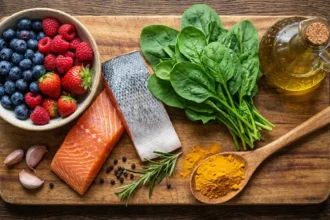
- Omega-3 “Insulation”: Walnuts and Salmon help signals travel smoothly and can lower inflammatory markers by up to 25%, strengthening the belly-brain link.
- Sourdough Swap: Reach for sourdough instead of white bread. The fermentation process makes it much easier on the gut and prevents a sugar spike.
- Smart Sips: Try Kombucha instead of soda. It’s a probiotic boost that won’t leave you with a mid-afternoon energy crash.
The Bottom Line: Trust Your Gut
Your digestive system is so much more than a tube that processes fuel. It’s an intelligent, reactive organ that shapes the very impact of the gut-brain axis on how you perceive the world. This powerful gut-brain connection ensures that what happens at lunch influences your mood by dinner.
As Harvard Health points out, this connection is a two-way street. While life stress can upset your stomach, an upset stomach can also create life stress. By balancing the gut-brain axis through mindful nutrition, you aren’t just helping your digestion; you’re teaching your brain how to be more resilient, focused, and calm. Next time you have a “gut feeling,” listen closely. Start your journey with the gut-brain axis by choosing one whole food swap today.
FAQs
What is the gut-brain axis and how does it function?
The gut-brain axis is a bidirectional communication system between your digestive tract and your brain. It utilizes the vagus nerve as a primary pathway, where 80–90% of information travels upward from the gut. This connection influences emotional resilience, mood, and cognitive focus based on your digestive health.
How much of the body’s serotonin is produced in the gut?
Approximately 95% of the body’s serotonin is produced in the gut by specialized cells in the lining. While this serotonin does not cross the blood-brain barrier directly, it acts as a critical signaling molecule. It communicates with the vagus nerve to send safety or worry signals to the brain.
How does the microbiome influence mood and stress?
The microbiome influences mood by producing signals that regulate stress markers. A thriving, diverse internal garden can reduce stress markers by 20–30%. Conversely, an imbalance known as dysbiosis affects nearly half of all adults and is linked to increased anxiety and a 1.8 times higher risk of worry.
What are the best foods for strengthening the gut-brain axis?
To support the gut-brain axis, consume probiotic-rich fermented foods like kefir and kimchi, which increase microbiome diversity. Prebiotic fibers found in bananas and asparagus feed healthy bacteria. Additionally, Omega-3 fats from salmon or walnuts insulate vagus nerve communication and can lower inflammatory markers by up to 25% for better mental clarity.
Disclaimer: This article is for informational purposes only and is not a substitute for professional medical advice, diagnosis, or treatment. Always seek the advice of your physician or a qualified health provider regarding a medical condition or digestive concerns.