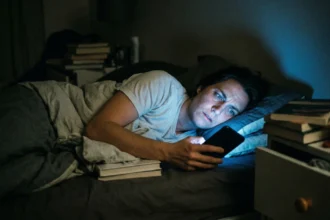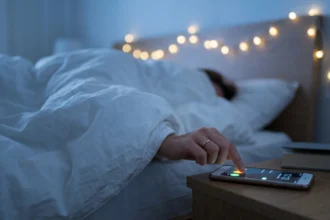




Ever spent a decade trying to be a “morning person,” only to feel like a phone that never quite charges past 40%? You follow the routines, drink the tea, and set five alarms. Yet, you still feel like a ghost inhabiting your own life until noon. If this sounds familiar, you aren’t alone. You might be asking, “why am I always tired?” The answer usually isn’t a lack of discipline. Instead, it’s often rooted in the science of chronotypes.
Nearly 40% of U.S. workers face chronic fatigue simply because their jobs don’t match their internal body clock. It’s a biological blueprint you’ve been fighting since birth. Your body doesn’t keep time based on the clock on your wall; it keeps time based on the “clock” in your DNA. When we force ourselves into schedules that clash with our biology, we create an internal friction that affects every cell in our bodies.
Save this for later
You’ll want to return to this map the next time you feel that “guilt” for not fitting into a 9-to-5 world.
The Science of Your Internal Battery: Understanding the PER3 Gene
We’ve all heard of “early birds” and “night owls,” but science has moved past these simple labels. Your individual timing, or chronotype, is heavily influenced by your genetics—specifically the PER3 gene.
This gene helps regulate your circadian rhythm. It determines when your body naturally releases melatonin to sleep and cortisol to wake up. Research into PER3 shows that specific variations dictate our daily preferences. The “4/4” variant is found in about 65–78% of people, typically leaning toward mid-day habits. Meanwhile, the rarer “5/5” variant (found in only 2–10%) often belongs to extreme evening “owls.”
According to the Sleep Foundation, chronotypes are as permanent as your eye color. Fighting yours isn’t about “trying harder.” It’s like trying to run modern software on an incompatible operating system. It’s just not going to be smooth.
Are You a Lion, Bear, Wolf, or Dolphin? Identifying Your Chronotype
To help make sense of these rhythms, sleep expert Dr. Michael Breus developed a model based on four different chronotypes. While these are approximate categories, they provide a great framework for managing your daily energy.
The 4 Chronotype Personalities and Their Energy Peaks
- The Lion (approx. 15%): The classic morning achievers. They wake up full of energy by 6:00 AM but “power down” and feel exhausted by 9:00 PM.
- The Bear (approx. 50%): Most of society is built for Bears. Their cycle follows the sun, peaking in the mid-morning but hitting a notable “2:00 PM slump.”
- The Wolf (approx. 15%): These are the true night owls. They hit their creative peak in the late evening but struggle immensely with early starts.
- The Dolphin (approx. 10%): Light sleepers whose brains stay alert even during rest. They often find their “zone” late at night but struggle with traditional sleep cycles.
The Hidden Danger of Social Jetlag on Your Health
When a “Wolf” is forced to wake up at 6:00 AM for work, they experience social jetlag. This is the physical friction caused by the gap between biological time and social obligations. The average person faces about two hours of this mismatch every day.
Researcher Till Roenneberg found that this is more than just an inconvenience. For every hour of mismatch, your risk of metabolic syndrome increases by 11%, and your BMI can increase by about 0.7 kg/m². This friction also causes a 15% dysregulation in cortisol, your primary stress hormone. It’s not just that you’re sleepy; your body’s entire process for managing sugar and fat gets thrown out of sync.
Why Early Start Times Are Damaging Adolescent Sleep
This biological mismatch is perhaps most damaging to adolescents. During puberty, a teen’s internal clock naturally shifts about three hours later. This isn’t “teenage rebellion” or laziness; it’s a biological shift that lasts until their early 20s.
According to Harvard Health, forcing a teenager to start school at 7:30 AM is the biological equivalent of forcing an adult to start their workday at 4:00 AM. Currently, 70% of teens get insufficient sleep. This chronic deprivation is linked to a 30% increase in mood disorders and a 20–40% spike in depression risk. When we label a teen “lazy” for sleeping until 10:00 AM, we’re ignoring a fundamental health requirement.
How to Audit Your Schedule Against Your Biology
The goal isn’t to quit your job, but to make small, calm adjustments to align your life with your rhythm. Understanding chronotypes allows you to stop fighting yourself and start working with your energy.
3 Simple Steps to Reset Your Internal Clock
- Track Your “Natural” Wake Time: Over a three-day weekend or vacation, don’t set an alarm. See when your body naturally wakes up to find your true baseline.
- Move Your “Big Tasks”: Align peak cognitive tasks with your energy levels. If you’re a Wolf, save the deep work for 4:00 PM. If you’re a Lion, finish your hardest tasks before noon.
- Light Therapy: Light is the strongest signal for your internal clock. Using light therapy in the morning can help regulate melatonin by up to 20%, helping you shift your rhythm more comfortably if your job requires an early start.
Why Being a Night Owl Isn’t a Choice
In our culture, early risers are often viewed as “hardworking,” while late risers are labeled “sluggish.” It’s time to retire that narrative. A Wolf working at midnight is just as productive as a Lion working at dawn; they’re simply using a different power grid.
Currently, 35% of adults get less than the recommended seven hours of sleep, largely because they’re fighting their natural chronotypes. The more you align your life with your biology, the more your “internal battery” will feel like it’s finally holding a charge. Be kind to yourself. Your timing isn’t a choice—it’s a biological gift.
FAQs
What is a chronotype and how does it affect sleep?
A chronotype is an individual’s natural biological timing influenced by genetics, specifically the PER3 gene. It determines when the body releases melatonin for sleep and cortisol for waking. Because chronotypes are permanent biological blueprints, fighting your natural clock can lead to chronic fatigue and misalignment with societal schedules.
What are the four main chronotypes in the Breus model?
The four chronotypes are Lions, Bears, Wolves, and Dolphins. Lions are morning achievers peaking early; Bears follow the sun’s cycle and make up 50% of the population; Wolves are evening-peaking night owls; and Dolphins are light sleepers who often find their focus zone late at night.
What is social jetlag and what are its health risks?
Social jetlag is the physical friction caused by a mismatch between biological time and social obligations, such as work or school. Research shows that every hour of mismatch increases the risk of metabolic syndrome by 11% and can lead to cortisol dysregulation, higher BMI, and increased risk of diabetes.
Why are early school start times harmful to adolescents?
During puberty, a teenager’s internal clock naturally shifts three hours later, a biological change lasting until their early 20s. Forcing early start times leads to insufficient sleep for 70% of teens, which is linked to a 30% increase in mood disorders and a 20–40% spike in depression risk.
How can I reset my internal clock using light therapy?
Light is the strongest signal for the internal body clock. Using light therapy in the morning can help regulate melatonin levels by up to 20%. This adjustment allows individuals to shift their rhythm more comfortably to meet societal demands, such as early work start times, without fighting their biology.
Disclaimer: This article is for informational purposes only and is not a substitute for professional medical advice, diagnosis, or treatment. If you are experiencing persistent, debilitating fatigue, please consult a healthcare professional to rule out underlying conditions.