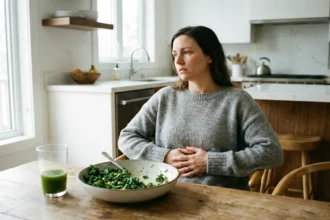



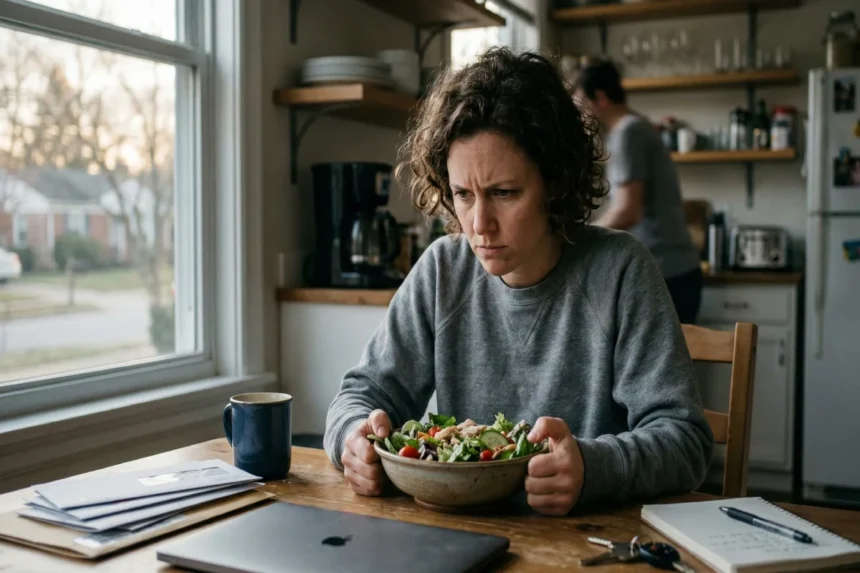
Have you ever looked at a slice of pizza and felt like you were “sinning”? Or maybe you’ve felt like a literal saint because you chose the kale salad instead. It’s exhausting to live in a world where your dinner feels like a performance review of your character. If you’ve felt “dirty” for eating certain foods, it’s time to realize you haven’t failed a test—you’ve just been sold the clean eating myth.
This cycle of food guilt and anxiety is often rooted in food moralization, a psychological trap that convinces us our worth is tied to our grocery list. By unraveling these labels, we can begin to build a truly healthy relationship with food. Save this for later.
The Trap of “Clean” vs. “Dirty” Language
In the wellness world, we’ve adopted a vocabulary that sounds more like a religious confessional than a kitchen. We talk about “cheating” on our diets or “staying clean” for the week. This language suggests that food has a moral compass, but biologically, it just doesn’t.
Labeling food as “dirty” does something sneaky to our brains: it makes us feel that we are inherently wrong for eating it. According to Healthline, this food moralization creates a cycle of shame that actually makes it harder to nourish ourselves in the long run. An apple isn’t “virtuous,” and a brownie isn’t “evil.” They’re simply different combinations of molecules that do different things for your body.
When “Healthy” Becomes a Hazard: Recognizing Orthorexia Nervosa Symptoms
Most of us start our nutrition journeys with great intentions—we want more energy or clearer skin. But for some, the quest for purity can spiral into orthorexia nervosa symptoms, a condition where “eating clean” becomes an all-consuming obsession.
Orthorexia isn’t necessarily about wanting to be thin; it’s a pathological obsession with “pure” or “correct” eating. While it’s not yet a standalone diagnosis in the DSM-5, experts at Harvard Health note it’s a serious among disordered eating patterns where food quality becomes a source of extreme distress.
The scale of this issue is larger than many realize. Symptoms affect roughly 27.5% of the population globally, and those numbers skyrocket to between 31.8% and 72% among nutrition students.
How Social Media Distorts Our View of Nutrition
On social media, the impact is even clearer—nearly 49% of Instagram users who follow “clean eating” accounts show orthorexic tendencies. If you’re skipping social events because you can’t control the ingredients, the diet isn’t serving your health anymore; it’s harming your life. This is one of the most significant risks associated with the psychological harm of dieting.
Choosing Nutrient Density Over Moral Judgment
Instead of looking at food as “good” or “bad,” try looking through the lens of nutrient density vs. food labels. It’s a much more helpful, less judgmental way to navigate the grocery store.
- High Nutrient Density: Foods like salmon, spinach, or lentils offer a ton of vitamins and fiber per calorie. Think of them as high-performance fuel.
- Lower Nutrient Density: Foods like white bread or soda provide energy (calories) but fewer “extra” nutrients like fiber or antioxidants.
Both have their place. A bowl of oatmeal gives you long-lasting energy for a busy morning, while a piece of birthday cake provides joy and connection at a party. Neither defines your worth as a human being. WebMD suggests that a balanced diet is about your total pattern of eating over weeks, not a single snack.
The Hidden Cultural Bias in Modern Wellness Trends
The clean eating myth often carries an unintentional bias against cultural foods. Many traditional dishes involving white rice, certain oils, or spices are unfairly labeled “unhealthy” by Western wellness standards.
When we say a meal isn’t “clean” because it contains white rice or soul food staples, we’re often inadvertently moralizing someone’s culture. True nutrition must be inclusive. There are a thousand ways to eat a balanced, nourishing diet that honors both your heritage and your health.
Practical Steps Toward a Healthy Relationship With Food
Unlearning these habits takes time, but you can start “de-moralizing” your plate today with a few small shifts in perspective:
The 80/20 Rule and Neutral Language
- Neutralize Your Language: Stop saying “I’m being so bad today.” Try: “I’m enjoying this meal, and I’ll have something more nutrient-dense later.”
- The 80/20 Rule: Focus on nutrient-dense foods about 80% of the time. Leave the other 20% for pure, guilt-free pleasure.
- Identify the “Why”: Before you cut out a food group, ask: “Am I doing this for energy, or because I’m afraid?” Extreme restriction can lead to physical risks like osteoporosis and depression.
- Listen to Your Body: This is the core of intuitive eating for beginners. Your body is excellent at telling you what it needs if you stop shouting at it with “rules.”
The Physiological Toll: How Food Moralization Impacts Stress Levels
When we feel guilty about what we eat, our bodies go into a minor stress response. Healthline points out that chronic stress—including food-shame—can actually interfere with digestion and spike cortisol levels.
The stakes are especially high for younger people; dieting teens are five times more likely to develop an eating disorder. Furthermore, research shows that food guilt strongly predicts bingeing behaviors. In a strange twist of irony, the psychological harm of dieting might be worse for your body than just eating the “unclean” food and moving on with your day.
A Final Note
Your plate isn’t a scoreboard for your soul. You aren’t “lazy” because you had takeout, and you aren’t a “hero” because you drank a green juice. You’re just a person who needs to eat.
When you strip away those labels, you reclaim the mental energy you’ve been spending on guilt. Use that energy for things that actually matter—like your hobbies, your family, or just getting a good night’s sleep. Healing your relationship with food is a marathon, not a sprint. You deserve to eat without an inner critic whispering in your ear.
FAQs
What is the clean eating myth?
The clean eating myth is a wellness trend that suggests food has a moral compass. It promotes the idea that some foods are “clean” or “virtuous” while others are “dirty” or “evil.” Biologically, this is inaccurate; food is simply a combination of molecules with varying levels of nutrient density.
What are the symptoms of orthorexia nervosa?
Orthorexia nervosa symptoms include a pathological obsession with “pure” or “correct” eating. This serious disordered eating pattern focuses on the quality of ingredients rather than weight loss. Signs include extreme anxiety regarding food purity, social isolation due to ingredient control, and sacrificing happiness for rigid nutritional rules.
How does food moralization affect mental health?
Food moralization creates a cycle of shame and anxiety, convincing individuals that their worth is tied to their diet. It increases the risk of bingeing behaviors and social withdrawal. Furthermore, chronic food-related guilt triggers stress responses, elevating cortisol levels and potentially causing more physiological harm than the food itself.
What is nutrient density compared to food moralization?
Nutrient density is a neutral, science-based way to evaluate food instead of using “good” or “bad” labels. High nutrient-dense foods, like salmon or lentils, offer many vitamins per calorie. Low nutrient-dense foods provide energy with fewer micronutrients. Both types have a place in a balanced, healthy diet.
How can I build a healthy relationship with food?
Building a healthy relationship with food involves neutralizing your language and practicing intuitive eating. Practical steps include following the 80/20 rule—prioritizing nutrient-dense foods while allowing for guilt-free pleasure—and questioning if food choices are based on health or fear. Curating social media to avoid “detox” culture also helps.
Disclaimer: This article is for informational purposes only and does not constitute medical advice. If you or someone you know is struggling with disordered eating, please consult a qualified healthcare professional or an eating disorder specialist.