


Ever wake up feeling like the Tin Man from The Wizard of Oz before he found his oil can?
You know the feeling. Stiff knees. A creaky back. Fingers that feel puffy and sore before you’ve even had your coffee. We usually blame these aches on “getting older” or an old sports injury. But there is another culprit hiding in plain sight: your grocery list.
If you are looking for joint pain relief, changing what is on your fork might be the most powerful thing you can do. You don’t need a biology degree to start an anti-inflammatory diet. You just need to know which foods act like fire-starters and which ones act like fire-extinguishers.
Here is your beginner’s guide to the anti-inflammatory diet—a fancy name for simply eating to reduce inflammation naturally and feel better.
What Is an Anti-Inflammatory Diet? (The Fire Analogy)
Before we get to the food, let’s clear up what “inflammation” actually is. Think of it like a fire.
- The Good Fire: You cut your finger. It gets red and hot. That’s your immune system sending in a “fire crew” to heal the wound. Once the job is done, the fire goes out.
- The Bad Fire: The crew arrives, but they never leave. Your body stays on high alert, attacking healthy tissues like your joints by mistake.
According to Harvard Health, this low-grade fire plays a huge role in arthritis and heart disease. Doctors measure this fire by looking for markers in your blood, like C-reactive protein (CRP).
The goal of an anti-inflammatory diet is simple: Put out the chronic fire.
Top 5 Foods for an Anti-Inflammatory Diet
You don’t need to shop at a pricey health food store. These foods that fight inflammation are at your regular supermarket. Here are the top 5 things to put in your cart.
1. Fatty Fish (Nature’s Lubricant)
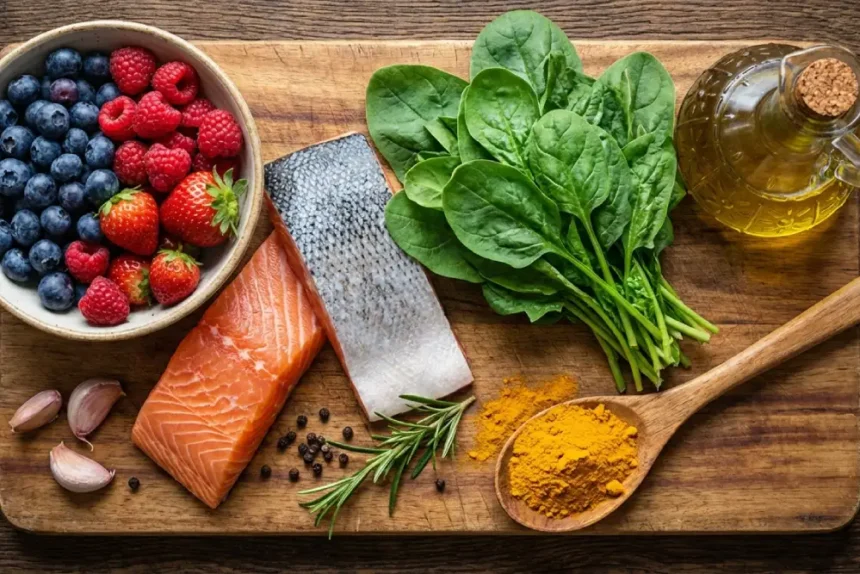
If your joints feel like rusty hinges, think of fatty fish as the oil. Fish like salmon, mackerel, and tuna are packed with Omega-3 fatty acids. These are famous for a reason: they interfere with the immune cells that cause swelling.
- Does it work? Yes. Studies show that Omega-3s can reduce the number of tender joints in arthritis patients. It often helps enough that people can lower their dose of painkillers.
- The Target: Aim for at least 2 servings a week on your anti-inflammatory diet.
2. Berries (The Bodyguards)
Strawberries, blueberries, and raspberries aren’t just tasty; they’re chemical warfare against pain. They get their bright colors from compounds called anthocyanins. According to WebMD, these act as antioxidants—little bodyguards that neutralize the molecules damaging your cells.
- The Target: Guidelines suggest eating 5 or more servings of fruits and veggies daily. Tossing a cup of blueberries into your oatmeal knocks out one serving before 9 AM.
3. Leafy Greens (The Vitamin Bomb)
Your mom was right. You need to eat your greens. Spinach, kale, and collards are loaded with Vitamin E. Healthline notes that a diet high in these veggies is consistently linked to lower levels of inflammation markers.
- Make it easy: Hate salad? Sauté kale with garlic and olive oil, or blend a handful of spinach into a smoothie. You won’t even taste it, promise.
4. Extra Virgin Olive Oil (Liquid Gold)
If you only make one change today, swap your butter for Extra Virgin Olive Oil (EVOO). This oil contains a compound called oleocanthal.
Here’s the cool part: Scientists found that oleocanthal works on the same pain pathways as ibuprofen. It’s nature’s painkiller and a staple of any anti-inflammatory diet.
- The Target: Trials often use 2 to 4 tablespoons per day. Use it for salad dressings or roast your veggies in it.
5. Turmeric and Ginger
Ancient medicine was onto something. Turmeric (that bright yellow spice) contains curcumin. The Mayo Clinic highlights it as a potent inflammation fighter.
- The Data: Studies on knee osteoarthritis show that curcumin supplements can improve pain and movement—sometimes just as well as low-dose NSAIDs.
- Pro Tip: Always eat turmeric with a pinch of black pepper. It helps your body absorb the curcumin by up to 2,000%.
4 Inflammatory Foods to Avoid
You can eat all the salmon in the world, but if you’re also throwing gasoline on the fire, you won’t feel much better. An effective anti-inflammatory diet limits these triggers:
- Refined Carbs: White bread and pastries turn into sugar instantly.
- Added Sugars: Soda and candy trigger inflammatory messengers.
- Processed Meats: Hot dogs and deli meats often contain preservatives that irritate the body.
- Fried Foods: These are often cooked in oils high in Omega-6s, which can promote inflammation if you eat too much of them.
Sample Menu: A Day on the Anti-Inflammatory Diet
Does this sound overwhelming? It’s surprisingly delicious. Here is what a “pain-free” menu looks like when following an anti-inflammatory diet:
- Breakfast: Oatmeal topped with frozen blueberries and walnuts.
- Lunch: A big salad with mixed greens, leftover grilled chicken, and an olive oil vinaigrette (1 tbsp).
- Snack: An apple sliced up with peanut butter.
- Dinner: Baked salmon (3-4 oz) with roasted broccoli and sweet potatoes.
The “Mediterranean” Secret
If you look at that menu, it looks a lot like the Mediterranean Diet.
Doctors rank this as the gold standard for health, and the numbers back it up. Research shows that people who eat this way have significantly lower inflammatory markers than those on a typical Western diet.
In fact, patients using this as an arthritis diet often report less morning stiffness and better mobility.
FAQs
What foods reduce inflammation quickly?
The most potent anti-inflammatory foods include fatty fish (salmon, sardines) rich in Omega-3s, dark leafy greens (spinach, kale), colorful berries, and extra virgin olive oil. These foods contain antioxidants and compounds like oleocanthal that actively lower inflammatory markers in the blood.
What foods make joint pain worse?
To reduce joint pain, avoid “inflammatory triggers” such as added sugars (soda, candy), refined carbohydrates (white bread, pastries), processed meats (hot dogs, deli meat), and fried foods. These items can spike insulin and trigger the release of pro-inflammatory cytokines.
How long does it take for an anti-inflammatory diet to work?
While some people feel more energetic within a few weeks, significant reductions in joint pain and stiffness typically take 8 to 12 weeks of consistent eating. It takes time for the body to lower systemic inflammation markers like C-reactive protein (CRP).
Is the Mediterranean diet good for arthritis?
Yes. The Mediterranean diet is widely considered the gold standard for managing arthritis. Research shows that its emphasis on healthy fats, whole grains, and vegetables significantly lowers inflammation levels and is associated with reduced pain and better physical function in arthritis patients.
The Bottom Line
Changing how you eat won’t fix your knees overnight. It’s not a magic pill. But an anti-inflammatory diet is a proven, long-term investment in your body.
Think of every meal as a chance to vote for how you want to feel.
- Vote for less pain by choosing the berries.
- Vote for better movement by choosing the fish.
Start small. Maybe this week, you just add some olive oil to your dinner. Next week, try a smoothie. Over time, these small changes can turn down the volume on your pain, helping you move through life a little more freely.
Disclaimer: This article is for informational and educational purposes only and is not a substitute for professional medical advice, diagnosis, or treatment. Always consult a qualified healthcare provider with any questions you may have regarding a medical condition or before making health-related decisions. Joint pain can have many causes. Always chat with your doctor before making big changes to your diet or if you have persistent pain.