


Imagine waking up at 95 years old with a sharp mind, a body that still moves with ease, and a calendar full of coffee dates. It sounds like a fairy tale, but in certain pockets of the world known as Blue Zones, this isn’t an anomaly—it’s just Tuesday. What if the secret to healthy aging isn’t found in a bio-hacking supplement, but in the simple fabric of how we spend our afternoons?
The Blue Zones are less about specific “superfoods” and more about an environment that makes the healthy choice the easiest one to make. While genetics account for roughly 20–30% of our lifespan, researchers find that true Blue Zones longevity is largely about environment. It is about closing the gap between healthspan vs lifespan.
Save this for later
You’ll want to revisit these Blue Zones pillars when life feels a little too fast and your “internal battery” needs a recharge.
Prioritizing natural movement over scheduled exercise
In the West, we often view movement as a chore to be “checked off” a list, usually in a 60-minute window at the gym. In the Blue Zones, the concept of “exercise” barely exists. Instead, natural movement is baked into the day like yeast into bread.
Residents in these regions don’t usually run marathons. They garden, walk to the market, and knead their own dough. They live in environments that “nudge” them into moving every 20 minutes. According to health.gov, even moderate, consistent physical activity significantly reduces the risk of chronic disease.
Think of this as keeping your battery on a “trickle charge” throughout the day. This type of natural movement is much more sustainable than letting your energy drain to zero and trying to jumpstart it with a high-intensity workout.
Discovering Ikigai: the sense of purpose that fuels life
One of the most striking things these Blue Zones hotspots share is a sense of purpose. In Okinawa, it’s called Ikigai purpose; in Nicoya, Costa Rica, it’s Plan de Vida. Both translate roughly to “the reason I wake up in the morning.”
Having a reason to get out of bed—whether it’s tending to a great-grandchild or mastering a craft—acts as a psychological anchor. A Harvard meta-analysis showed that people with a strong sense of purpose tend to have a 20% lower mortality risk and significantly lower rates of cardiovascular disease.
When you have a “why,” your body’s stress response stays more regulated. Within the Blue Zones, having this destination is the difference between a battery that leaks energy through anxiety and one that holds its charge.
Building a social safety net through social integration
We talk a lot about what we eat, but we rarely talk about who we eat with. Social integration is perhaps the strongest predictor of longevity in the Blue Zones. Whether it’s the Moai (support groups) of Japan or the tight-knit homes of Sardinia, no one grows old alone.
The Sleep Foundation notes that social connection can even improve our sleep quality. It reduces the “vigilance” or anxiety we feel when we’re isolated. Loneliness, on the other hand, is cited by health authorities as being as damaging to health as smoking 15 cigarettes a day.
In these Blue Zones communities, neighbors aren’t just people next door; they’re a biological insurance policy. They ensure you stay active, stay fed, and—most importantly—stay seen.
Why a plant-forward diet is the Blue Zones gold standard
There’s a common myth that Blue Zones residents are strictly vegan. In reality, their lifestyle habits lean toward a plant-forward diet. They eat meat sparingly—usually as a celebratory side dish rather than the main event.
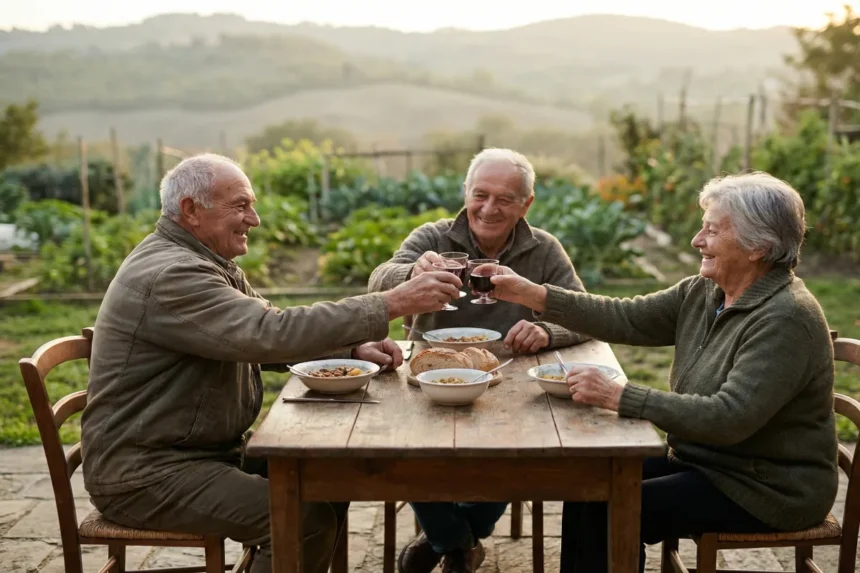
The foundation of their table is built on beans, greens, and whole grains. They also lean into “moderate indulgence.” In many Blue Zones, a glass of local wine with friends at 5:00 PM is a daily ritual.
This isn’t because the alcohol is a “magic bullet.” It’s about the context of the Blue Zones. The wine is consumed slowly, with food, in a state of high social joy. It’s a moment to unplug and let the nervous system take the wheel.
Deconstructing the data debate and recent criticisms
Recently, the Blue Zones concept has faced some fair criticism. Researcher Saul Justin Newman has raised questions about “data quality” in some of these regions. He argues that some “centenarians” may actually be the result of poor record-keeping or even pension fraud. Newman suggests that in areas like Okinawa, over 82% of centenarian records might actually be deceased individuals.
Does this mean the Blue Zones are a myth? Not necessarily. While the specific number of 100-year-olds is debated, the midlife health advantage of these populations remains impressive.
Understanding the midlife mortality advantage
Data from Rosero-Bixby showed that Nicoyan men once had a 33% lower mortality rate compared to the rest of Costa Rica. Even if the data has some “noise,” the signal from the Blue Zones is clear: low-stress environments, natural movement, and community living produce better “healthspans” than a sedentary, isolated lifestyle.
How to “Blue Zone” Your Own Life
You don’t have to move to a Mediterranean island to live longer. You can start deconstructing these Blue Zones habits right where you are:
- Audit your “Nudges”: Can you park further away? Take the stairs? Look for ways to move without “exercising.”
- Find Your Moai: Identify 3 to 5 people you can truly rely on. Schedule a recurring, non-negotiable time to see them.
- Eat the Beans: A plant-forward diet is easy to start. Swap one meat-heavy meal a week for a lentil stew.
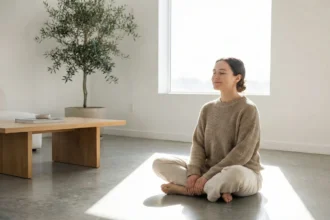
- Rest Strategically: Prioritize “downshifting.” Whether it’s an afternoon nap or a digital detox, give your nervous system time to repair.
Longevity isn’t a race to see who can live the longest; it’s a journey to see how well we can live while we’re here. By focusing on connection, purpose, and simple movement, we aren’t just adding years to our life—we’re adding life to our years.
FAQs
What is the benefit of natural movement in Blue Zones?
Natural movement in Blue Zones involves low-intensity physical activity integrated into daily life, such as gardening or walking to the market. Unlike scheduled workouts, these habits provide a “trickle charge” of energy. According to health.gov, consistent moderate activity significantly reduces chronic disease risk and is more sustainable than high-intensity sessions.
How does having a sense of purpose or “Ikigai” affect longevity?
Having a sense of purpose, known as Ikigai, acts as a psychological anchor. A Harvard meta-analysis indicates that a strong sense of purpose is linked to a 20% lower mortality risk and reduced cardiovascular disease. It helps regulate the body’s stress response, preventing energy leaks often caused by chronic anxiety.
Why is social integration vital for healthy aging?
Social integration, like the Japanese Moai, provides a “biological insurance policy” by ensuring individuals stay active and supported. The Sleep Foundation notes that social connection reduces isolation-related anxiety, improving sleep quality. Conversely, health authorities compare the physical damage of loneliness to smoking 15 cigarettes a day, making community essential.
What defines a plant-forward diet in longevity hotspots?
A plant-forward diet prioritizes beans, greens, and whole grains as the nutritional foundation. Residents are not strictly vegan; they consume meat sparingly, typically as a celebratory side dish. Moderate indulgence, such as drinking local wine with friends, is also a daily ritual that emphasizes social joy and slow consumption.
What are the primary criticisms of Blue Zones research?
Critics like Saul Justin Newman argue that Blue Zones data may be skewed by poor record-keeping or pension fraud. Newman suggests 82% of centenarian records in Okinawa may involve deceased individuals. However, even with data noise, midlife health advantages persist, such as Nicoyan men once having a 33% lower mortality rate.
Disclaimer: This article is for informational purposes only. While these Blue Zones habits are generally health-promoting, always consult with a healthcare professional before making significant changes to your diet, alcohol consumption, or physical activity, especially if you have underlying health conditions.