


Ever walk into a grocery store and just feel your stomach drop?
You grab a carton of eggs, a loaf of bread, maybe some chicken. Suddenly, the total is double what it used to be. It’s stressful. It feels unfair. And when budgets get tight, the first thing we usually sacrifice is the good stuff—nutrition.
We have been taught that eating healthy on a budget is a paradox. We see influencers drinking $12 green juices and cooking fancy wild-caught salmon, and we think, “Well, I can’t afford that, so I guess I’m stuck with instant noodles.”
Here is the good news: That’s a total myth.
You don’t need to be rich to fuel your body well; you just need to know where to look. In fact, studies show that shifting toward whole foods can actually reduce your grocery bill by 10–30% while boosting your vitamin intake.
Here is your guide to eating healthy on a budget, outsmarting inflation, and fueling your body without breaking the bank.
Is Eating Healthy on a Budget Actually Impossible? (The Myth)
We tend to assume that the cost of healthy eating is always higher than processed food. But when you look at the price per nutrient, the math changes.
Eating healthy on a budget isn’t about buying expensive organic kale chips; it’s about getting back to the basics. It turns out that some of the most nutritious foods on the planet are also the cheapest.
1. The “Frozen” Secret (Why Fresh Isn’t Always Best)
We tend to think that if it isn’t in the fresh produce aisle, it isn’t “clean” eating. But let’s look at the reality.
Fresh vegetables often travel thousands of miles on a truck. By the time they reach your fridge, they’ve been exposed to light and air for days, slowly losing their nutritional value. Plus, be honest: How often do you buy a bag of salad mix, only to throw it away three days later because it turned into brown slime? That’s literally throwing money in the trash.
The Swap: Head to the freezer aisle. This is a secret weapon for eating healthy on a budget.
The Vitamin C Reality Check
According to Healthline, frozen fruits and vegetables are usually picked at “peak ripeness” and flash-frozen immediately.
- The Hard Data: Research is eye-opening. Fresh peas can lose up to 50% of their Vitamin C within 24 to 48 hours after harvest. Frozen vegetables? They stay stable for months.
- The Verdict: That bag of frozen broccoli isn’t just cheaper. It might actually be more nutritious than the “fresh” one that’s been sitting under fluorescent lights for a week.
2. Rethink Your Protein (Meat vs. Plant-Based)
Meat is the receipt-killer. When inflation hits, steak and chicken prices skyrocket.
You don’t have to become a full vegan. But swapping out meat for plant-based protein a few times a week is the smartest move for eating healthy on a budget.
The Superstars: Dry Beans & Lentils.
- The Cost: Dry beans are dirt cheap. They cost roughly 1 cent per gram of protein.
- The Comparison: A serving of beans costs about 25 to 40 cents. A serving of meat? That’s often 80 cents to over $2.00. You get similar muscle-building fuel for less than half the price.
Why it’s good for you:
Meat has zero fiber. Beans are packed with it. Fiber acts like a broom for your digestive system and keeps you full longer. It’s a win for your wallet and your waistline.
3. Stop Paying the “Laziness Tax”
We pay extra for convenience. When you buy pre-cut pineapple or individual packets of instant oatmeal, you’re paying the factory to do the work for you.
The Strategy: Buy the “raw” version in bulk.
- Grab a big tub of plain oats instead of the sugary instant packets.
- Get a big bag of brown rice instead of the microwave pouches.
Nutrition Note: This isn’t just about saving pennies; it’s about saving your heart. Harvard Health notes that eating whole grains (like brown rice) is a game-changer.
- The Stat: Eating about 3 servings of whole grains a day is linked to a 25–30% lower risk of Type 2 diabetes. Since whole grains keep you full longer than white rice, you’re getting “more health per dollar,” which is the core philosophy of eating healthy on a budget.
4. Generic vs. Brand Name: The Truth
There’s a psychological trick brands play on us. We think the bright, colorful box with the TV commercial is better than the plain store-brand box next to it.
In the food world, this is rarely true.
If you look at the ingredient label of a name-brand can of black beans and a store-brand can, they usually look exactly the same: Beans, Water, Salt. The only difference is the price tag.
Pro-Tip: Look down. Supermarkets usually put the most expensive items right at eye level. The cheaper, generic versions are often hiding near your knees. Mastering this shelf-scan is crucial for eating healthy on a budget.
5. The “3-for-3” Strategy for Nutritious Meal Planning
Going to the grocery store without a plan is like going into battle without a shield. You will get distracted by sales on junk food you don’t need.
You don’t need a complex spreadsheet. Just follow the “3-for-3” Rule:
Pick 3 breakfasts, 3 lunches, and 3 dinners that you actually like. Repeat them for the week.
- Example:
- Breakfast: Oatmeal with frozen berries (high fiber, low cost).
- Lunch: Leftover dinner or an egg salad sandwich.
- Dinner: Lentil soup or bean burritos (high protein, low cost).
If every onion you buy has a “job,” you won’t find it rotting in your pantry a month later. Reducing waste is the fastest way to succeed at eating healthy on a budget.
6. Canned Fish: The Forgotten Superfood
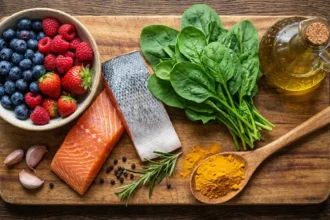
We all know salmon is good for us because of Omega-3 fatty acids (healthy fats that are great for your brain). But fresh salmon fillets can be incredibly expensive.
Do not overlook the canned food aisle.
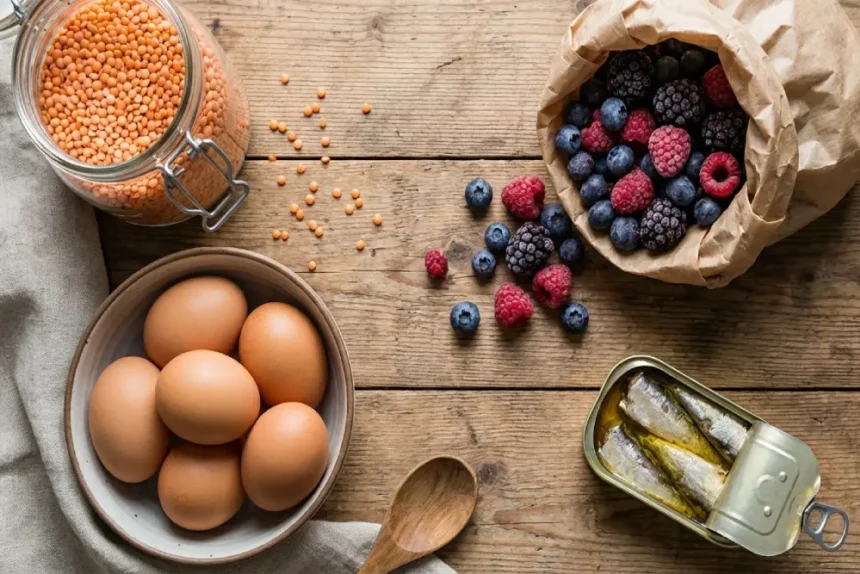
- Canned Salmon & Sardines: These provide similar—and sometimes higher—amounts of heart-healthy Omega-3s at a much lower cost per gram than fresh fish.
- The Bonus: Canned salmon often includes soft, edible bones. That sounds weird, but it gives you a massive boost of calcium you don’t get from a fillet.
It might not look as pretty on Instagram, but your heart can’t tell the difference.
FAQs
How can I eat healthy on a tight budget?
Focus on high-nutrient, low-cost staples like dry beans, lentils, eggs, oats, and brown rice. Swap expensive fresh meat for plant-based proteins or canned fish, and purchase frozen vegetables instead of fresh produce to reduce waste and get more nutrients for your dollar.
Are frozen vegetables as healthy as fresh?
Yes, and often healthier. Frozen produce is picked at peak ripeness and flash-frozen, locking in nutrients immediately. Studies show that fresh vegetables can lose up to 50% of their Vitamin C during transport and storage, whereas frozen vegetables retain their nutritional profile for months.
Is it actually cheaper to eat healthy?
Contrary to popular belief, yes. Research indicates that shifting from a diet high in processed foods and meat to a whole-food diet (grains, legumes, and vegetables) can reduce grocery bills by 10–30%. You pay a premium for “convenience” foods, whereas raw ingredients are significantly cheaper per serving.
What are the cheapest sources of protein?
Dry beans and lentils are the most economical protein sources, costing roughly 1 cent per gram of protein. Eggs are also extremely cost-effective compared to beef or poultry. For seafood, canned sardines and salmon provide healthy fats and protein for a fraction of the cost of fresh fillets.
The Bottom Line on Nutrient Density
When you’re trying to save money, you want the most “bang for your buck.” In nutrition, we call this nutrient density.
A bag of chips costs $4.00. It gives you calories, but no vitamins, and you’ll be hungry again in an hour.
A bag of lentils costs $2.00. It gives you protein, iron, fiber, and vitamins, and it keeps you full for the rest of the day.
Eating healthy on a budget just requires a shift in mindset. It’s not about buying expensive organic kale chips. It’s about getting back to the basics—beans, rice, frozen veggies, and eggs.
Your body will love the nutrients, and your bank account will definitely love the savings.
Disclaimer: This blog post is for informational purposes only and isn’t medical advice. Always chat with a healthcare professional or a registered dietitian before making big changes to your diet.