


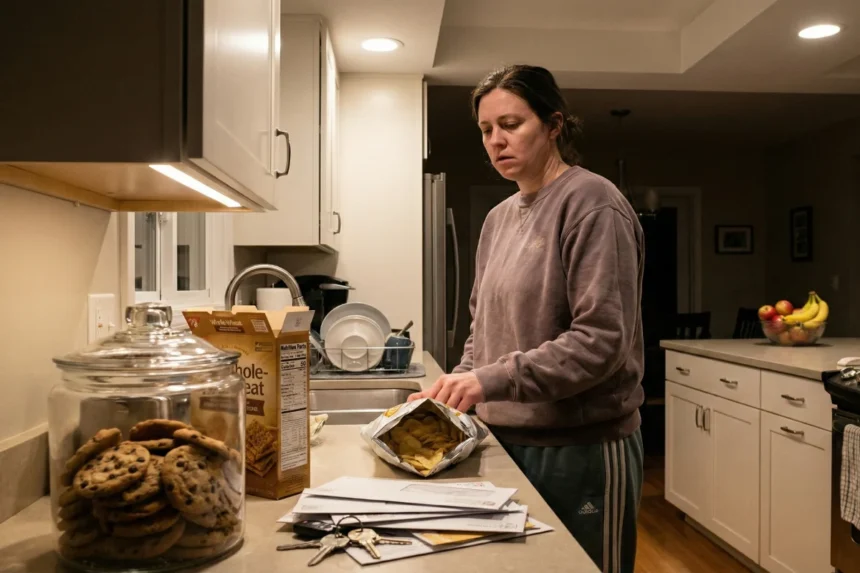
Ever walked into the kitchen just for a glass of water, only to find yourself five minutes later dusting pretzel salt off your shirt? It’s easy to blame a “lack of willpower,” but the truth is much more interesting: your kitchen layout and overeating are often directly linked. If you feel like you’re constantly fighting cravings, it’s time to stop blaming your mind. Instead, start looking at environmental nutrition hacks that can reshape your relationship with food.
We’re used to thinking of nutrition as a test of character. However, experts in behavioral design for healthy eating suggest it’s actually an architectural challenge. Research shows these environmental nutrition hacks are actually twice as effective at helping people stay on-track compared to willpower alone. By redesigning food environments in your own home, you can guide yourself toward better habits without ever feeling like you’re on a restrictive diet. These environmental nutrition hacks allow your kitchen to do the hard work for you.
Save this for later
You’ll want to refer back to these tips next time you’re reorganizing your home.
The “See-Food” Diet: How visibility drives consumption
The Cornell Food and Brand Lab famously found that we’re incredibly susceptible to the “See-Food” diet: quite literally, we eat what we see. In their studies, people who kept a bowl of fruit on their counter weighed an average of 13 pounds less than their neighbors. On the flip side, those who kept breakfast cereal on display had a BMI that was 1 to 2 points higher. Utilizing environmental nutrition hacks like hiding cereal boxes is a simple way to dampen these visual hunger triggers.
Despite this, nearly 50% of American kitchens have snacks sitting right out in the open. This happens because of proximity bias in food choice—our brains are hardwired to take the path of least resistance. You’re actually twice as likely to eat healthy foods if they’re visible. If the carrots are hidden in a dark, opaque drawer, they might as well not exist. This is why redesigning food environments is so crucial for success.
The startling link between BMI and kitchen clutter
It turns out a messy kitchen does more than just stress you out; it can actually change how you eat. Research suggests that BMI and kitchen clutter are significantly correlated because chaotic environments lead to “disinhibited eating.” Essentially, when your space feels out of control, your brain looks for a way to self-soothe. By applying environmental nutrition hacks, you can lower the biological drive to snack.
When things feel hectic, your cortisol (the stress hormone) can increase by 15%. This biological shift often leads to a 20–30% spike in snacking on high-calorie comfort foods. Think of a clean countertop as a visual “reset button” for your nervous system. These environmental nutrition hacks create a calm space that encourages you to make intentional choices rather than reactive ones.
The Delboeuf Illusion: Why plate color changes your appetite
Did you know the color of your plates can trick your brain into eating less? This is known as the Delboeuf Illusion. When there’s a high color contrast between your food and your plate—like green broccoli on a bright white plate—your brain is much better at perceiving the Delboeuf illusion portion size. Applying environmental nutrition hacks to your dinnerware is one of the easiest ways to manage intake without counting calories.
- The Contrast Trick: Using a dark blue plate for light-colored foods can reduce the amount you serve yourself by 10–30%. If you eat white pasta on a white plate, it’s much harder to see the portion size.
- The Size Trap: Harvard Health notes that larger plates make a normal portion look tiny. Swapping to smaller plates can naturally reduce your calorie intake by 20–30%.
- The Rim Illusion: Even the width of the plate’s rim matters. A wide rim can create a visual trick that makes you serve 5–10% less food.
These environmental nutrition hacks prove that the eye often eats before the stomach does.
Lighting and the “Fast Food” Effect on digestion
There’s a reason high-end restaurants use dim, soft lighting while fast-food joints are bright and fluorescent. Kitchen lighting and appetite are deeply connected. Bright, harsh lights tend to make us eat faster and more mindlessly. In contrast, soft, warm lighting encourages us to slow down. One of the best environmental nutrition hacks is simply changing your bulbs to a warmer hue.
Slowing down can reduce eating speed by 10–15%. This pace is vital because, as WebMD explains, it takes the brain 20 minutes to receive the “I’m full” signal. Gentle lighting gives your biology the time it needs to catch up with your appetite. Using environmental nutrition hacks like dimmers can help you savor your food and naturally eat less.
Practical steps for redesigning food environments
You don’t need a full renovation to change your “environmental nutrition.” You just need to change your kitchen’s “default” settings. These environmental nutrition hacks are about making the healthy choice the easiest choice.
The Eye-Level Rule for better choices
Move healthy foods to the middle shelves where you’ll see them first. This makes you 2–3 times more likely to choose them. This is one of the most effective environmental nutrition hacks for families. Put the “sometimes” treats on the very top or bottom shelves where they require more effort to reach.
Opaque vs. Clear storage strategies
Store healthy staples like lentils or nuts in clear glass jars so they look appetizing. Put the chips in opaque containers to keep them “out of sight, out of mind.” These environmental nutrition hacks reduce the constant visual pull of low-nutrient foods.
The Pre-Portion Strategy to avoid grazing
Instead of bringing the whole box to the couch, use a small bowl. This creates a natural “stopping point” that can reduce how much you eat by 20%. Many people consider this a cornerstone of their environmental nutrition hacks toolkit.
Placing water front-and-center
Keep a beautiful pitcher of water on the counter. Healthline suggests that staying hydrated can curb “false hunger” by as much as 50%. Simple environmental nutrition hacks like this ensure you are actually hungry before you start cooking.
Why your kitchen is your greatest ally
The goal of these environmental nutrition hacks isn’t to restrict yourself; it’s to make your home a supportive partner in your health journey. When your kitchen is designed to support you, you don’t have to rely on willpower to stay on track. By redesigning food environments, you remove the friction between your current self and your health goals.
By treating your kitchen like a laboratory for behavioral design, you can turn your home into a space that naturally fuels your body. It’s not about being perfect—it’s about making these environmental nutrition hacks work for you, one countertop at a time. Take a look around your kitchen today; you might find that a small shift in scenery is all you need to find your balance. These environmental nutrition hacks are the foundation of a sustainable, healthy lifestyle.
FAQs
How does kitchen layout influence overeating?
Kitchen layout and overeating are linked through behavioral design and visibility. Research shows keeping cereal or soda on display can increase BMI, while a fruit bowl on the counter correlates with lower weight. Proximity bias means you are twice as likely to eat healthy foods if they are visible and placed at eye level.
What is the Delboeuf Illusion and how does it affect portion size?
The Delboeuf Illusion is a visual trick where plate color and size change your perception of portion size. Using a dark plate for light-colored foods can reduce serving sizes by 10–30%. Additionally, swapping larger plates for smaller ones can naturally reduce calorie intake by 20–30% by making portions look larger.
Does kitchen clutter affect snacking habits and BMI?
Yes, BMI and kitchen clutter are significantly correlated because chaotic environments trigger “disinhibited eating.” A messy kitchen can increase cortisol levels by 15%, leading to a 20–30% spike in snacking on high-calorie comfort foods. A clean, clear countertop acts as a visual reset, encouraging more intentional and less reactive food choices.
How does kitchen lighting affect appetite and digestion?
Kitchen lighting and appetite are connected through eating speed. Bright, harsh lights often lead to mindless, faster eating. In contrast, soft, warm lighting encourages you to slow down, potentially reducing eating speed by 10–15%. This delay gives the brain the 20 minutes required to receive the stomach’s fullness signals.
Disclaimer: This article is for informational purposes only and is not a substitute for professional medical advice. If you are struggling with disordered eating or significant weight concerns, please consult a healthcare professional or a registered dietitian. Implementing environmental nutrition hacks is a supplemental strategy and should be part of a broader health conversation with your doctor.