


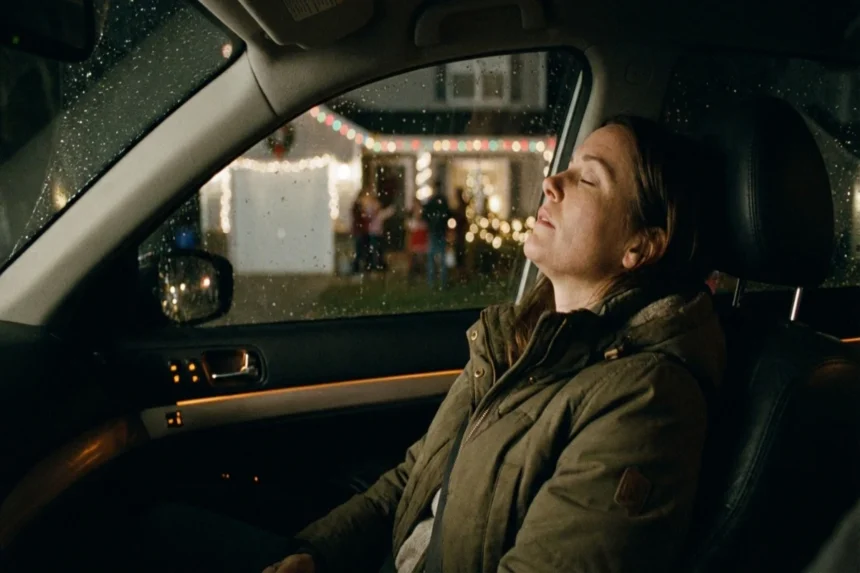
You’re sitting in your car outside a holiday party, staring at the steering wheel. You know you need to go in, but you’re trying to summon the energy just to unbuckle your seatbelt. If you feel like your personality has suddenly shut down, you are likely suffering from an introvert hangover.
Or maybe the party was yesterday. But today, you feel a physical heaviness in your limbs and a fog in your brain.
This isn’t just “being tired.” Data suggests that over 50% of the population leans toward introversion, and for this group, the holidays are a sensory endurance test. With 89% of adults reporting high stress right now, the introvert hangover is a neurobiological reality, not a mood swing.
Here is why your social battery drained so fast, and how to protect your energy without cancelling Christmas.
The Biology of an Introvert Hangover (Dopamine vs. Acetylcholine)
To understand the fatigue, you have to look at your brain chemistry. Introversion isn’t just a personality quirk; it’s a biological setting.
Psychologists have found that introverts and extroverts process dopamine (the reward chemical) differently.
- Extroverts have a high threshold. They need high stimulation to feel good.
- Introverts have a high dopamine sensitivity. When you get flooded with dopamine (loud music, small talk), it doesn’t feel rewarding; it feels overwhelming. Your brain prefers acetylcholine, a chemical linked to focus and calm.
The result? An introvert hangover. A study from the University of Helsinki suggests that social fatigue sets in after about 3 hours of intense interaction. For introverts in December, this crash leads to a spike in cortisol, making you feel the urge to escape.
3 Physical Signs Your Social Battery Drained
An introvert hangover feels surprisingly physical. It’s your nervous system’s way of pulling the emergency brake. Recovery can take anywhere from 24 to 72 hours.
Watch for these biological stop signs:
1. The “Verbal Glitch”
You struggle to find words or stare blankly when someone asks a simple question. Your brain is buffering. This cognitive fog is a hallmark of holiday social exhaustion.
2. Sensory Rage
The sound of chewing, a ticking clock, or a scratchy sweater suddenly feels unbearable. Your threshold for sensory input has collapsed.
3. The “Cynicism Shield”
Your internal monologue becomes sharp or critical. This is a defense mechanism. Your brain is creating distance to keep people away so you can recharge.
(CTA: Save this for later! Pin this list so you can recognize the difference between being “antisocial” and biologically depleted.)
3 Strategies to Prevent an Introvert Hangover
You can’t change your biology, but you can change how you navigate the season. You don’t have to hide under a blanket until January. Use these strategies to stop the introvert hangover before it starts.
1. Create a “Sensory Air-Lock”
You don’t need to leave the party early, but you do need to take “micro-breaks.” The NIMH suggests that reducing sensory input regulates an overactive nervous system.
The Move:
Every 90 minutes, step away. Go to the bathroom, your car, or a quiet hallway.
- Turn off the bright lights (if you can).
- Close your eyes.
- Take ten deep breaths.
This cuts the stream of dopamine, allowing your brain to catch up so you can go back in without snapping at anyone.
2. Stop the Shame Spiral (CBT)
Introverts often feel guilty. You might think, “I’m being boring,” or “I should be having more fun.” This added shame drains your battery even faster, worsening the introvert hangover.
The Fix:
Use Cognitive Behavioral Therapy (CBT) to flip the script.
- Old Thought: “I can’t handle this; everyone else is having fun and I’m just tired.”
- New Thought: “My brain processes information deeply. I am taking a quiet moment to recharge so I can be present.”
Shift the narrative from “social failure” to “biological maintenance.”
3. The “Bookend” Technique
If you have a high-demand event (like a family dinner), you must “bookend” it with low-demand time. This pacing is essential for coping strategies for introverts.
The Strategy:
- The Pre-Game: Spend the hour before the event alone. Read, listen to music, or sit in silence.
- The Recovery: Plan your exit strategy. Have comfortable clothes laid out and a plan to do absolutely nothing when you get home.
This signals to your brain that the high-stimulation period is temporary. It creates a safety net, which lowers the fight-or-flight response during the event.
The Bottom Line
You do not have to be the life of the party to be worthy of the season.
Your quiet presence is a gift. Your ability to listen deeply is a gift. But you cannot offer those gifts if you are suffering from an introvert hangover.
This December, give yourself permission to protect your peace. If you need to leave early, leave. If you need to say no, say no. Your mental health is more important than your attendance record. Respect your biology, and you might just find you actually enjoy the holidays again.
FAQs
What is an introvert hangover?
An introvert hangover (or social hangover) is a physical and emotional crash following excessive social interaction. It occurs because introverts have a lower threshold for dopamine stimulation. When this threshold is exceeded, the brain becomes overstimulated, leading to fatigue, brain fog, and an urgent need for solitude to recover.
What are the symptoms of an introvert hangover?
Common symptoms include physical lethargy (feeling “heavy”), difficulty finding words or articulating thoughts, sensory irritability (sensitivity to noise/light), and cynicism. It feels similar to physical exhaustion but is caused by neurochemical depletion rather than lack of sleep.
How long does an introvert hangover last?
Recovery from an introvert hangover typically takes 24 to 72 hours. The duration depends on the intensity of the social event and the amount of downtime taken afterward. To speed up recovery, minimize sensory input (dim lights, silence) and engage in solitary, low-dopamine activities like reading or resting.
How can I prevent social exhaustion during the holidays?
To prevent social exhaustion, use the “bookend technique”: schedule quiet time immediately before and after events. Additionally, take “micro-breaks” every 90 minutes during a party (stepping into a quiet room) to lower cortisol levels and reset your nervous system before you reach the breaking point.
Disclaimer: This article is for informational purposes only and is not a substitute for professional mental health advice. If feelings of overwhelm, anxiety, or depression are interfering with your daily life, please consult with a qualified therapist or healthcare provider.