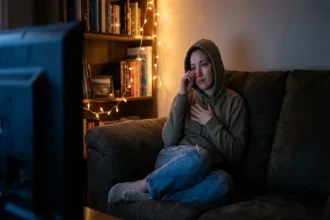




Have you ever walked away from a dinner with friends—people you truly love—only to feel like someone pulled the plug on your energy? You enjoyed the laughs, yet the moment you’re alone, a heavy wave of exhaustion hits. It’s a confusing feeling to be “happy but drained,” and it often leads to a nagging guilt. However, recognizing social burnout symptoms is the first step toward realizing you aren’t “broken.”
Understanding the difference between social fatigue vs introversion helps explain why even extroverts need a strategy for recharging your social battery. For many, the drain comes from neurodivergent burnout causes or the hidden mental masking exhaustion that happens when we try to “fit in.”
What Exactly is Social Fatigue?
Social fatigue is a very real physiological state where your brain’s processing power has been maxed out. Even if you love being around people, your nervous system has a limit. Eventually, it needs to go “offline” to reboot.
According to researchers at the NIH, our brains are constantly scanning environments for cues—tone of voice, facial expressions, and unspoken rules. When this scanning stays active for too long, it stops being a natural activity and becomes a high-energy “cost” that leaves your internal battery in the red.
Social Fatigue vs Introversion: The Biological Difference
While introverts may reach this point faster, social fatigue can hit anyone. Introversion describes where you get your energy; social fatigue describes the point of total cognitive depletion. It’s the difference between preferring a quiet night and being physically unable to process another word.
The High Cost of Performance: Masking and Code-Switching
One of the main reasons we feel so spent is “masking.” This is the subconscious act of altering your personality to suit the room. You might be modulating your voice, forcing eye contact, or pushing yourself to laugh at jokes that don’t quite land.
Mental Masking Exhaustion in Neurodivergent Lives
While we all do this to some extent to be polite, the mental labor is immense. For neurodivergent individuals, especially those on the autism spectrum, masking is a major driver of chronic burnout. Think of it like running a heavy software program in the background of your brain; eventually, the system starts to overheat. This mental masking exhaustion is a significant, yet often invisible, contributor to social burnout symptoms.
The Emotional Toll of Code-Switching
Socializing often requires “code-switching” for many people, particularly those from minority backgrounds. This involves changing your language or behavior to navigate different cultural or professional spaces. It isn’t about being “fake”; it’s a survival strategy used to feel safe or respected.
Research shows that frequent code-switchers experience much higher rates of emotional exhaustion. Every time you filter your words to avoid being misunderstood, you’re spending “ego depletion” points. By the end of the night, you aren’t just tired; you’re emotionally spent.
Sensory Overstimulation and the “HSP” Factor
For some, the drain is even more intense due to Sensory Processing Sensitivity. Based on Dr. Elaine Aron’s research on Highly Sensitive People (HSP), roughly 15% to 20% of the population processes information more deeply. Some recent studies suggest this figure could even be as high as 30%.
In a crowded restaurant, an HSP isn’t just listening to a friend. They’re also processing the clinking of silverware and the flickering lights. This trait has been observed in over 100 species, proving it’s a biological survival strategy, not a flaw. The Mayo Clinic notes that sensory overstimulation in adults can trigger a stress response, making social recovery a biological necessity.
Recharging Your Social Battery: How to Protect Your Peace
If you’re hitting a wall and noticing social burnout symptoms, try these protective boundaries to manage your energy more effectively:
- The “Social Buffer” Rule: Avoid back-to-back commitments. If you have a big event Saturday, keep Sunday morning completely clear.
- Practice “Selective Masking”: Find one or two people in your life with whom you feel safe dropping the mask. Being your unedited self can actually be restorative.
- Sensory Grounding: If things get too loud, take a five-minute “sensory break” in a quiet space. Focus on your breath to calm your system.
- Direct Communication: Try saying, “I had such a great time, but my social battery is low, so I’m going to head home.” Most people will respect the honesty.
Why You Don’t Need to “Fix” Your Social Needs
It’s time to normalize this recovery period. Feeling drained after a party doesn’t mean you have an anxiety disorder. It simply means your nervous system is signaling that it’s time for maintenance. Connection is vital—the WHO cites social support as a pillar of mental well-being—but a quality connection needs a well-rested participant. You can’t show up for others if you’re running on 1% battery.
Socializing is an art, but resting is a science. When you feel that post-social slump, don’t meet it with judgment. Instead, meet it with a little curiosity and kindness. Your brain has been doing the heavy lifting. By giving yourself permission to go “offline,” you’re making sure that the next time you step into the light, you can shine with your full, authentic energy.
FAQs
What is the difference between social fatigue and introversion?
Introversion describes where an individual naturally gains their energy, whereas social fatigue is a physiological state of cognitive depletion. While introverts may experience exhaustion faster, social fatigue can affect anyone whose brain has maxed out its processing power from scanning environments for social cues and unspoken rules.
What are the primary causes of social burnout symptoms?
Social burnout is often driven by “masking,” where individuals suppress natural traits to fit in, and “code-switching,” which involves adjusting behavior to navigate different cultural spaces. Additionally, sensory overstimulation and neurodivergent burnout causes, particularly for those on the autism spectrum, contribute to significant mental and emotional exhaustion.
What is a Highly Sensitive Person (HSP) and how does it affect energy?
A Highly Sensitive Person (HSP) has Sensory Processing Sensitivity, a biological trait where information is processed more deeply. Affecting 15% to 30% of the population, HSPs may experience sensory overstimulation in crowded settings. The Mayo Clinic notes this can trigger a stress response, making recovery a biological necessity.
How can I recharge my social battery and manage social fatigue?
You can manage social energy by implementing the “social buffer” rule, which involves avoiding back-to-back commitments. Other strategies include practicing “selective masking” with trusted individuals, using sensory grounding techniques like deep breathing during events, and using direct communication to let others know when your social battery is low.
Is feeling drained after socializing a sign of a mental health disorder?
Feeling drained after social interaction does not necessarily indicate an anxiety disorder. It is often a signal from the nervous system that it requires maintenance. Normalizing this recovery period is essential for quality connection, as social support is a vital pillar of mental well-being according to the WHO.
Disclaimer: This content is for informational purposes only and is not intended as medical advice. If social exhaustion is significantly impacting your daily life or is accompanied by persistent feelings of hopelessness, please consult a qualified mental health professional.