



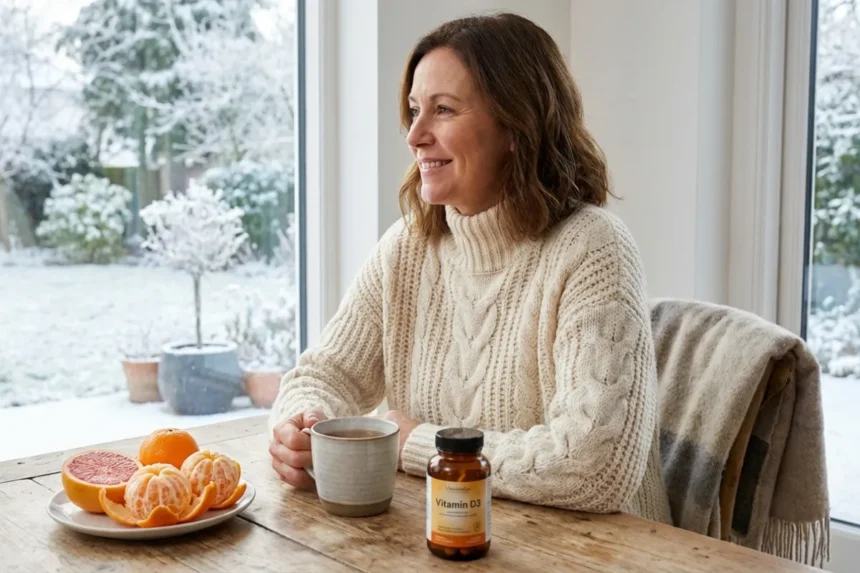
It’s mid-December. The alarm goes off, and it’s pitch black outside. You drive to work in the dark, drive home in the dark, and feel a bone-deep exhaustion that an extra espresso just can’t touch.
Your skin is dry, your mood is flat, and everyone in the office seems to be coughing. Identifying the best vitamins for winter isn’t just a wellness trend—it is a biological necessity.
It’s easy to blame the weather, but there is likely something happening on a cellular level. During winter, the shift in sunlight and our tendency to eat heavy comfort foods creates a gap in our nutritional armor.
You aren’t just “tired”—your body is literally starving for the tools it needs to regulate your mood and immune system. In fact, data shows that depending on where you live, anywhere from 25% to 88% of people become deficient in key nutrients during the cold months.
Here are the best vitamins for winter that actually matter right now, the science on why they work, and how to fix your “Winter Deficit” safely.
Why You Need the Best Vitamins for Winter (The “Winter Deficit”)
We tend to think of vitamins as a “set it and forget it” thing. But your environment dictates your biology.
Think of your body like a house. In the summer, the windows are open; you’re getting fresh air and sunlight (Vitamin D) and eating fresh, nutrient-dense salads. In the winter, the windows are shut tight. The sun’s angle changes, making it physically impossible for your skin to produce Vitamin D in many northern places.
Filling that gap isn’t about popping a handful of random gummies. Finding the best vitamins for winter is about targeting the specific nutrients your body loses when the temperature drops.
3 Essential Nutrients for Winter Immune Support
If you want to stay healthy this season, ignore the flashy marketing blends. Focus on these three evidence-based powerhouses.
1. Vitamin D: The “Bottled Sunshine”
When compiling a list of the best vitamins for winter, Vitamin D is always number one.
Doctors at the Cleveland Clinic explain that Vitamin D acts more like a hormone than a typical vitamin. It helps manage your bone health, but in winter, its main job is regulating your immune system and your mood.
The Winter Reality:
The stats here are staggering. In northern climates (like the US and Europe), deficiency rates skyrocket to between 25% and 88% in the winter. This risk is even higher for older adults and people with darker skin, because melanin acts as a natural sunblock.
Does it actually help?
Yes. Research suggests that Vitamin D supplementation can reduce the risk of acute respiratory infections by about 3% to 6%. That might sound small, but if you are deficient, that protection is crucial.
How to get it:
Even if you stood outside naked at noon (which, please don’t), the winter sun is too weak to help you. You likely need a supplement. The National Institutes of Health (NIH) generally suggests 600–800 IU daily for adults to keep levels steady.
Save this for later!
Screenshot this list so you know exactly what to grab in the supplement aisle.
2. Vitamin C: The Symptom Shortener
Vitamin C is a staple on any list of the best vitamins for winter, but it is often misunderstood. We’ve all chugged orange juice hoping to stop a cold in its tracks, but the science is a little more nuanced.
The Truth:
Taking Vitamin C won’t necessarily stop you from catching a cold. However, it acts like a repair crew once you are sick.
Studies show that consistent Vitamin C intake (at least 200 mg/day) creates an 8% reduction in cold duration for adults and a 14% reduction for children. Basically, it won’t stop the cold, but it might save you one full day of sniffling and misery.
How to get it:
Skip the expensive powders; your body absorbs Vitamin C best from food.
- Red bell peppers (Fun fact: One cup has 3x more Vitamin C than an orange!)
- Citrus fruits (Oranges, Grapefruits)
- Kiwi
- Broccoli
3. Zinc: The Viral Gatekeeper
Zinc rounds out the trio of the best vitamins for winter. While not technically a vitamin (it’s a mineral), Zinc is the heavy hitter for immunity. Think of Zinc like the bouncer at a club—it physically stops viruses from getting in and multiplying.
The Truth:
The data on Zinc is impressive. High-quality studies found that taking zinc lozenges (at least 75 mg/day) within 24 hours of feeling sick can shorten a cold by 30% to 40%.
That could mean getting better three days sooner.
Important Note:
Form matters here. Lozenges work better than pills because they coat your throat, attacking the virus right where it lives.
How to get it:
- Oysters (The king of zinc)
- Beef and poultry
- Pumpkin seeds and lentils
Safety Check: Dosage for the Best Vitamins for Winter
When it comes to supplements, “more” is not always “better.” The industry is the Wild West, and it’s tempting to buy the bottle with the highest number on the label.
To safely use the best vitamins for winter, keep these facts in mind:
- Vitamin D is fat-soluble. This means your body stores the excess rather than peeing it out. Extremely high levels can lead to toxicity.
- Zinc is great in short bursts, but high doses over a long time can actually suppress your immune system.
- Vitamin C is water-soluble, but mega-doses can still upset your stomach.
You don’t need expensive, branded “Immune Blends.” A simple, generic bottle of Vitamin D3 is usually effective and costs less than a fancy latte.
The Bottom Line
You don’t need a medicine cabinet full of expensive pills to survive the season. You just need to acknowledge that your body is operating in a darker, colder environment.
Focus on eating real food (grab those red peppers!), consider a modest Vitamin D supplement to replace the missing sun, and keep some Zinc lozenges in your drawer for the first sign of a scratchy throat.
By prioritizing the best vitamins for winter, you give your resilient body the extra help it needs to fight back against the cold.
FAQs
What are the best vitamins to take in winter?
The essential nutrients for winter health are Vitamin D, Vitamin C, and Zinc. Vitamin D supports immune function during low-sunlight months, Vitamin C helps reduce the duration of cold symptoms, and Zinc lozenges can inhibit viral replication to shorten illnesses significantly if taken at the first sign of symptoms.
Why is Vitamin D important in winter?
Vitamin D is critical in winter because the sun’s angle in northern climates is often too low for the skin to produce it naturally. This leads to a “winter deficit” in up to 88% of people, weakening the immune system and increasing susceptibility to respiratory infections and seasonal mood changes.
Does Vitamin C prevent winter colds?
Generally, no. Research shows that taking Vitamin C does not prevent you from catching a cold. However, consistent intake can shorten the duration of a cold by about 8% in adults and 14% in children, acting as a “repair crew” to reduce symptom severity rather than a preventative shield.
How does Zinc help with colds?
Zinc is a mineral that acts as a “viral gatekeeper,” physically preventing the rhinovirus (common cold) from multiplying in the upper respiratory tract. Studies indicate that taking zinc lozenges (at least 75 mg/day) within 24 hours of symptom onset can shorten a cold by up to 30–40%.
Disclaimer: This article is for informational purposes only and does not constitute medical advice. Always consult with a healthcare professional before starting any new supplement regimen, especially if you take other medications.